Discover the destination Vrsar
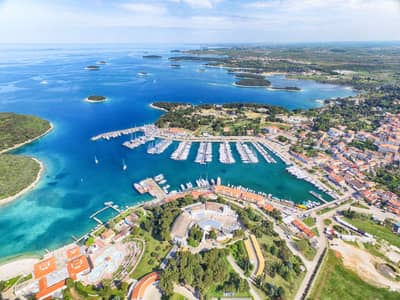
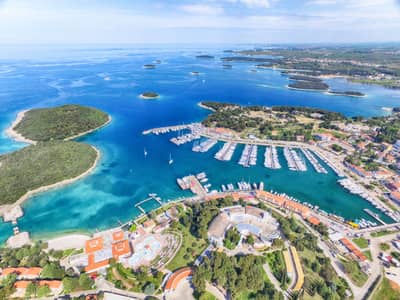
Vrsar Archipelago (Vrsar, Istria)
It consists of 18 unpopulated green islands and islets, including: Figarolica, Lakal, Salamon, Zavata, Galiner, Sv. Juraj, Gusti skolj, Koversada i Orlandin.
Giacomo Casanova Street (Vrsar, Istria)
The Italian adventurer and writer Giacomo Casanova stopped in Vrsar twice during the 18th century (in 1743 and 1749) and he wrote about it in his famous memoirs. According to the legend, Casanova did not just spend his summer holidays in Vrsar but took up residence there, so a Vrsar street containing La Casa di Rose, his alleged residence, was named after him.
The Fkk Beach Koversada (Vrsar, Istria)
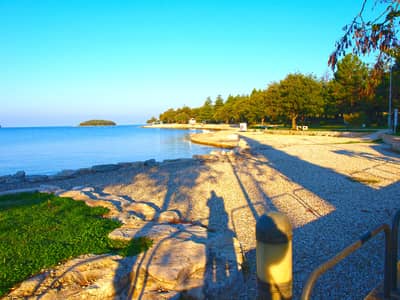
The Beach Koversada is situated under the same name camp and touristic settlement. It stretches 5 km along the coast with the various beaches. At the middle sandy beach the access for the people with special needs is arranged. One part of the beach is allowed for the dogs. Near the beach are few fun and recreational contents and is possible to rent deck chairs and umbrellas. Fkk Beach Koversada Info
The park of Dušan Dzamonja’s sculptures (Vrsar, Istria)
The protected house and Sculpture Park complex belonging to the greatest Croatian and European contemporary sculptor Dušan Džamonja, whose sculptures are exhibited in the most renowned museums of the world, is spread over an area in Vrsar which provides a view of one of the most beautiful archipelagos in the Mediterranean. The Sculpture Park has contained sculptures, graphics and drawings since 1970.
Old Romanesque Gate (Vrsar, Istria)
The gate was built in the second half of the 17th century or the first half of the 18th century when the architecture and stone work in the towns of Istria turned to Romanesque style. The gate was included in the town wall system. It contains a fragment of the town walls and tablet with a shallow relief of St. Mark’s lion – a symbol of the Venetian rule. Old Romanesque Gate info
The Main Town Gate
Next to the church of St. Fosca there is the eastern, that is the main gate. In the past centuries this was the main entrance to the fortified town, which as late as in the 19th century began to expand down the hill slopes. (Until the 19th century there were only a few lonely houses or some church outside the walls).
This Romanesque gate dates from 13th century. A semicircular arch is carefully carved. Once the gate was provided with iron-bound wooden wings made of hard Istrian oak. At the inner part of the gate-posts two rings still can be seen – one made of stone and the other of iron, by means of which the wooden wings were fixed to the posts. The gate was part of town walls, so aove ai a fragment of the ancient wall has been preserved. On a stone tile formed like a shield there is shallow relief with a floral motif representing a miniature lion of St. Mark (symbol of the Venetian Republic) holding a Mark the Evangelist’s book. The lion has raised wings and lowered tail and in his paws he holds a closed book, what means the relief was made during the war time. The peacetime lions used to have an open book in their paws with the Latin text: PAX TIBI MARCE EVANGELISTA MEUS (Peace to you, my Mark the Evangelist). The lion resembles the Venetian lions from the 14th century, but also the ones from the 15th and 16th century, therefore it is very defficult to date it precisely. The first Venetian lions appeared on public buildings in Istria at the end of the 13th and beginning of the 14th century. (From the 10th till the 18th century Vrsar belonged to the Poreč bishopric, so maybe the lion had been brought here from somewere else and put above the gate after 1778, when Venice took Vrsar over from the Poreč Bishops).In front of the gate, on the left side, there is the fitst school building dating from the 19th century.
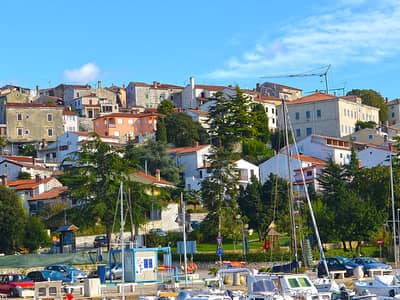
Summer Residence of the Poreč Bishops
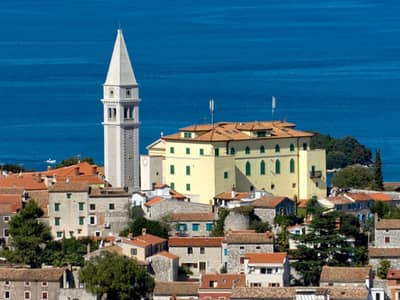
In the immediate vicinity of the parish church there is a monumental palace thet used to be the summer residence of the Poreč Bishops. On this strategic location the Poreč Bishops had at first built some modest Romanesque palace (12th/13th century). In the centuries to come the original palace was continuosly being reconstructed and enlarged.
In fact, the conteporary palace arose after reconstructions of the original Romanesque castle in the period between the 14th and 18th century. It is not quite clear how the palace orginated. In the architecture of the building traces of different styles can be found-from the Romanesque till the Baroque. The palace was fortified, therefore in documents it was named ‘castrum’ (fortification, fortified castle). The castle of the defensive walls have been preserved till the present days. In the south there are two slender observation towers from the 13th century having a square ground-plan and being provived with loop-hotels. On the facade of the left tower there is a slarium dial. The palace consisted of numerous rooms (for the Bishops, servants and guests). In the ground floor wine and oil presses were situated, as well as baking ovens, water cisterns and store-room for agricultural products such as oil, wineand corn produced on the Bishops’ fields around Vrsar. A stable for horses and mules was also part of the palace. In one tower there was probably a prison for disobedient citizens.
The Bishops used the palace as the summer residence, but sometimes also as a refuge (‘refugium’). At inconvenient times (e.g. during war or plague) the Poreč Bishops used to leave Poreč and come to Vrsar. During the riots in Poreč in 1299 the bishop Bonifacius took refuge here. On the other hand, some Bishops were constantly dwelling in Vrsar. In the 17th century the Bishop Ruggiero Tritoni moved from the unsound malarial Poreč and settled down in Vrsar (1632 – 1644). He died and was buried here. Likewise the Bishop Gianbattista de Giudice lived and died in Vrsar (1644 – 1666). Whenever the Bishops were entering or leaving Vrsar, their peasants were obliged to carry their luggege without any charge. In one document dating from 1577 it says: ‘They (peasants of Vrsar) are also obliged to carry the Bishop’s luggage without any charge whenever the Bishop is coming to the castle or is leaving it’.The palace was sometimes visited by high ecclesiastic personalities and statesman. Here the Poreč Bishops used to hold synods for the local clergy. In the presence of prominent persons the Bishops sometimes issued important documents. At the beginning of a document issued by the Bishop Oton in 1288 it says: ACTUM EST HOCH IN TURRI CASTRI URSARIAE… (This was made in the tower of the Vrsar castle).
At the end of the 18th century (1778) the Venetian Republic abolished the church county of the Poreč Bishops and the palace became Venetian state property. At the height of the Venetian rule over Vrsar (1778 – 1797) the palace was occasionally inhabited by the Venetian major of the municipality of St. Lovreč, to which Vrsar wasannexed after abolishment of the Bishops’ rule. In a decree issued in 1793 by the Venetian central authority the major of St. Lovreč, named Palma, was given permission to spend a few months a year in Vrsar because of its healthy climate. On that ocasion the renovation of the palace was ordered. In the 19th century the palace was conveyed to the patrician family Vergottini from Poreč. During the 20th century the palace has begun to crumble, so nowadays it is a ruin crying for renovation.
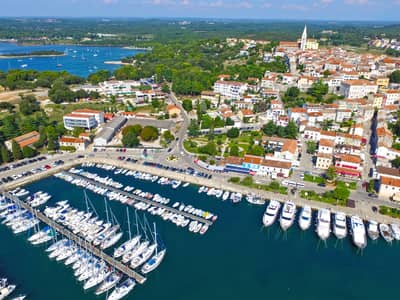
Harbour
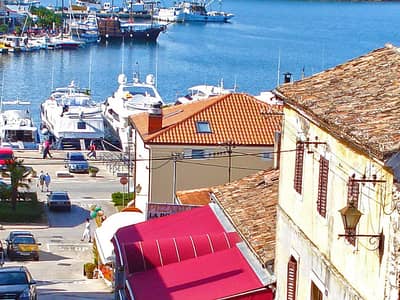
The harbour was formed in the 19th century when a number of houses were built on the slope between the old town centre and the sea front. However, life has been going on in the bay of Vrsar since ancient times up to present days. In some medieval documents the area around the harbour of Vrsar was called "Fabian". In the period from the 12th to the 17th century here the saltworks and storehouses were standing that belonged to the Poreč bishopric.
Along the coast between the village of Funtana and the Lim Channel the archaeological zone is stretching containing finds from the Antiquity and Roman times. On several locations remains of Roman country villas (villae rusticae) have been discovered. Abundant traces of Roman private and public buildings have also been found around the bay. Pietro Coppo. an Italian geographer from Isola was the first who. in his book "Del sitto dell Istria" dating from the first half of the 16th century ("On the position of Istria", Venice. 1540), drew attention to the remains of the Roman architecture in the harbour of Vrsar. Referring to them, he wrote: "Along the most part of the coast... there are remains of ancient buildings, what gives evidence that once a number of houses were standing here".At the beginning of the 20th century the Czech archaeologist Anton Gnirs (1875-1933) wrote about some Roman remains in the harbour of Vrsar which had come under the sea due to soil depression.
Abandoned Stone
The ancient abandoned stone quarries should also be added up to the sights of Vrsar. In the Vrsar quarries the stone has been obtained ever since Roman times.
Within easv reach of the basilica of St. Marv. on the islets offshore there are remains of abandoned quarries (e.g. on the top of the islet St. George). Some art historians brought up a theory that maybe the monumental and monolithic cupola of the East Gothic king Theodore the Great’s (493-526) mausoleum in Ravenna (having a diameter of 10.76 m and weighing 230 t) is made of the rock broken off the top of that islet. (The archaeologist and historian Dr. Ante Šonje is of the opinion that the cupola originates from a quarry south of Poreč.) On the peak Gavanov Vrh (Ital. Monte Ricco) east of Vrsar there is also an abandoned quarry, as well as on a hill north-east of Vrsar. High-quality grey stone (Aurac) has been obtained here ever since Romanesque times. The quarries around Vrsar and Rovinj were exploited to the most extent during the long rule of the Venetian Republic in Istria (from the 13th to the 18th century).In the time of the Renaissance and Baroque the high-quality stone from Vrsar (pietra di Orsera) was well Vrh (Ital. Monte Ricco) east of Vrsar there is also an abandoned quarry, as well as on a hill north-east of Vrsar. High-quality grey stone (Aurac) has been obtained here ever since Romanesque times. The quarries around Vrsar and Rovinj were exploited to the most extent during the long rule of the Venetian Republic in Istria (from the 13th to the 18th century).In the time of the Renaissance and Baroque the high-quality stone from Vrsar (pietra di Orsera) was well known in Italian towns. It was especially used in Venice for building of palaces, bridges and churches. In order to provide good quality stone. Italian sculptors and constructors have occasionally visited Vrsar.
The first figures concerning exportation of Vrsar stone to Venice date back to the 14th century. In the year 1334 the Venetian sculptor Leonardo Tagliapietra was staying in Vrsar temporarily. The Renaissance sculptor Antonio Rizzo (1467-1498) from Verona, who donated to Venice his most important works of art (e.g. the tombstone to the doge Iron, works on the doge’s palace etc.) visited occasionally Rovinj and Vrsar at the time of his full activity in Venice. Nowadays the international sculpturing school is held every summer in the revived quarry “Montraker”. Works of art made in this school remain in Vrsar making the town space nobler in that way. By the road to Funtana there is the cemetery built in 1900 by Celeste Gerometta, a building contractor from Vrsar. In the vicinity the atelier – summer mansion of the sculptor Dušan Džamonja is standing. In the large park miniatures of his works are exhibited, whereas the originals are located all over our country, as well as abroad.
Roman Store-houses and Roman Necropolis
Several decades ago, in 1928. foundations of a large building about 70 metres long were excavated in the harbour of Vrsar.In Roman times Vrsar was an important trade centre and according to archaeologists' opinion these foundations belonged to Roman store-houses for merchandise (lat.horreum).
Harbour equipment from the Roman period shows the existence of brisk trading at that time. In the past the remains of the Roman embankment could also be seen in the harbour. On the southern side of the promontory Montraker. which is bordering the harbour from the north, remains of the Roman necropolis (graveyard) have been discovered, together with a modest sepulchral inventory. The ashes of burned dead bodies used to be put into the urns and then buried. Some ten years ago a Roman cipus (tombstone) from the 2nd century was excavated in the harbour. The tombstone was erected by a husband to his beloved wife. On the cipus the following text is engraved: DIES MANIBUS SECURAE CON1UGI DULCISSIMAE AURELIUS CRAESCES FECIT. (To the house-gods. To the sweet wife Secura. raised by Aurelius Crasces). This is the only Roman epigraphic monument discovered in Vrsar. At present it is kept in the Regional Museum in Poreč". Fragments of late antique sarcophagi have also been found in Vrsar.
The Old Romanesque
Compared to the main medieval town gate in the eastern part of Vrsar. this gate is smaller, therefore it is called the small town gate. The gate was built in the second half of the 13th century, when the Romanesque style was prevailing in Istrian towns.
The gate frame consisting of thirteen stone blocks was carved out very precisely. In the past the gate used to be part of the town walls. Two gate wings made of hard Istrian oak have been preserved till the present days. Especially interesting are the stone rings that hold the wings. The gate is provided with a closing mechanism. Above it there is a fragment of the town walls and a stone tile with shallow relief representing St. Mark’s lion. As to its artistic characteristics, the lion resembles the one above the east gate and is probably made by the same artist. This lion also holds a closed book in his paws, has raised wings and lowered tail. The relief was made between the 14th and 16th century. Most likely it was brought from somewhere else and put above the gate about 1778. when the Venetian republic became the ruler of Vrsar. Just by the gate two iron balls are built in the wall. They probably originate from the English ships which at the beginning of the 19th century cannoned Istrian towns, at that time under occupation of Napoleon’s soldiers.
Streets and Squares
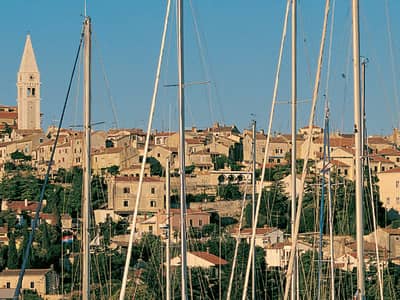
In the course of the past centuries narrow streets and small intimate squares developed inside the ancient walls. Interesting examples of residential architecture containing elements of different historic styles have been preserved till the present days. Old houses with intersting architectural details (courtyards, water-wells, staircases, doors, windows, balconies, chimmneys) are particularly attractive.
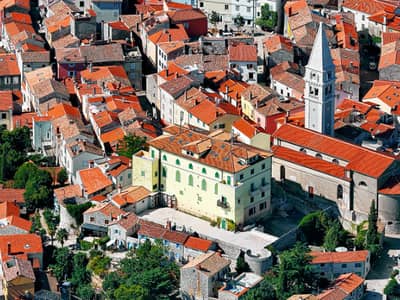
The street ‘Ulica gradskih vrata’ (The Town Gate Street) is leading from the main gate to the top of the old town. There are several interesting old houses in that street. Not far from the main town gate there is a house with curious stone figures representing two chubby-faced, full-breasted woman. The figures are built in high up in the house edges. Along this house the picturesque street ‘Pod voltom’ (‘Under the vaults’) is going, being vaultedon two spots. Vaulted streets are typical of the medieval archittecture. Little space inside the town dictated rational and economic use of it. In the Town Gate Street there is also a house dating from the 18th century characrised by both the Renaissance and Baroque style. On its portal the Latin text is engraved: IO PIETRO (voda) M POLLO (ieri) F (eccit) ANNO D (omini) 1757. (I, Petar Boico, of the deceased Pollo, solemny made in the year of the Lord 1757). On the right side there are several ancient houses. In the Casanova Street there is a nice house built in the Romanesque style. In 1963, during reconstruction works in the Town Gate Street, some fragments of the Bronze Age ceramics were found.On the top of the old town of Vrsar there is the parish church of St. Martin and the ruined castle (former summer residance of the Poreč Bishops).
07
Belvedere
FKK Istra
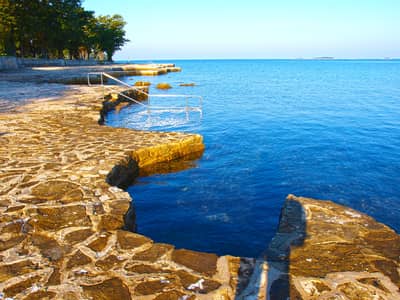
Funtana
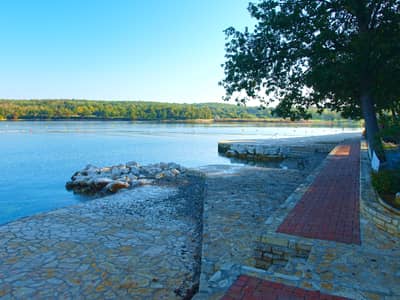
Strand Funtana is located in a small fisherman town near Vrsar, between Rovinj and Porec. It is a beach paved with concrete and natural roughly-worked stone blocks. The entrance into the sea is facilitated by stone stairs and with metal hand holds.
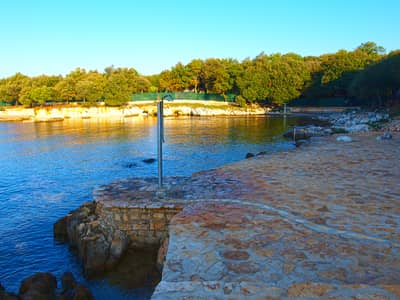
Gradska plaža Vrsar
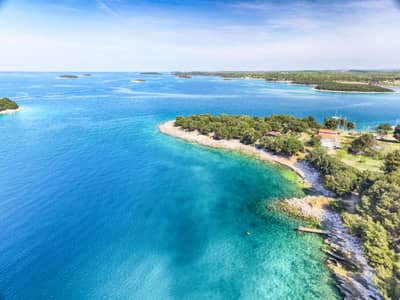
Koversada
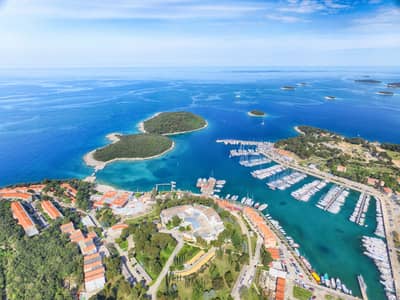
Petalon
Puntica
Valkanela
08
Church of St. Fosca
This church, dating from the first half of the 17th century, s built in the style of the Renaissance, but has some Baroque elements too. The facade and the Renaissance portal are very plain. On both sides of the portal there are two windows provived with iron bars.
Until the requisition of the bells for war purposes during the World War I and II in the belfry there were two bells made in the Venetian foundries (from the 17th and 18th century). Teh bell with the signature OPVS CASTELLIS made in the 16th century in the Venetian foundry was removed in the World War I. It was replaced by the bell made in the foundry Lapagna in Triest 1922. this bell, as well as the other one from 17th century, decorated with images of St. Fosca, the Madonna and crucifixion and provided with the Latin text SANCTA FVSCA VRSARIAE MDCLXXX (St. Fosca of Vrsar 1680) was taken away by the Italians during the World War II. However, these bells were not used for war purposes. Today they can be seen in the bell tower of the parish church of St. Martin.The church of St. Fosca has been recently renovated. In it there is a sacral collection containing valuable exhibits, such as the picture ”Martyrdom of St. Fosca” dating from the 17th century. Especially attractive are the sepulchral slabs decorated with coat-of-arms and Latin texts. In front of the main altar there is the tomb of the Vrsar priest Luka Prodanić (Luca Prodanich), Croat, who died in 1659. On the slab the clerical symbols (Chalice and host) are engraved.
Church of Blessed Mary of Mercy
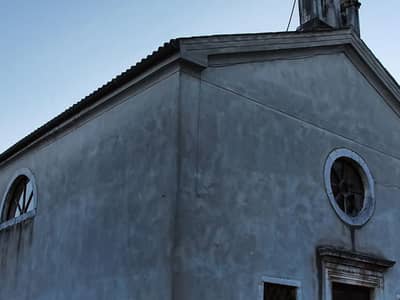
The Church of Blessed Mary of Mercy situated in abandoned graveyard was reconstructed from the grounds in 1998. It is a Romanesque church originating from 11th century that has been reconstructed several times.
Inside the church there are crypts from 17th and 18th century.
Church of St. Anthony
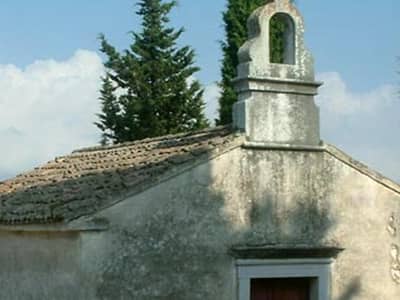
Within the easy reach of the small town gate there is the church of St. Anthony of Padova dating from the second half of the 17th century and having characteristics of the Renaissance-Baroque style. The facade is quite simple. On the portal lintel there is an engraved text written in form of abbreviations (I.O.B.C.F.F.C.E.L.E.) and the year of construction (1656).
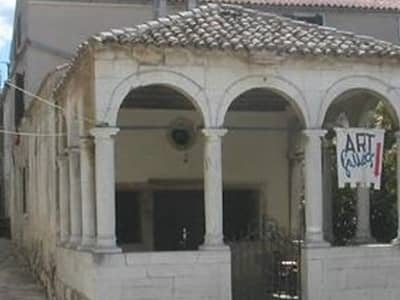
On both sides of the rectangular portal there are two square windows with iron bars. Over the portal there is a small round window and on the south wall a semilunar one. Above the facade a simple belfry is standing formed like an arcade. Up to the requisition for war purposes in the belfry there was a small bell from 1657 richly decorated with images of St. Anthony. Holy Virgin and the Saints. On the top of the belfry there is a stone ball and an iron cross. In front of the church there is the arched doorway (roofed entrance). Arches and wooden roof frame are supported by ten stone columns. Such doorways are very interesting architectural-artistic motifs to be found in front of Istrian country churches. They originate from the period between the 14th and the 19th century and represented a prolongation of the church space. Those who did not manage to enter the crowded small church used to stand here, as well as persons under arms. Here people took shelter from the heat or rain. Those who were late and found up the closed town gate used to spend the night in the porch. Here the court trials took place and business arrangements were made. The church interior has been renovated, so nowadays summer art exhibitions are held here.On the wooden Venetian altar (of the late Renaissance style with Baroque elements) there is a painting of St. Anthony with the Saints.
Romanesque Basilica of St. Mary of the Sea
In the Vrsar harbour there is a very interesting medieval monument: the Romanesque basilica of St. Mary of the Sea. The basilica represents an outstanding monument of the Romanesque architecture in Istria. Its history is long and curious. In Roman times some large building (maybe "villa rustica" - a country house with farm buildings) was standing on that place.
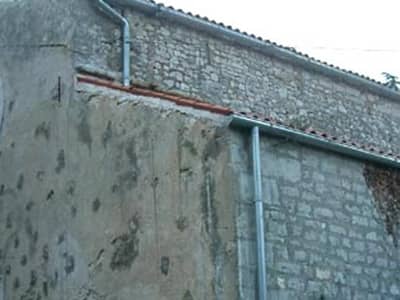
The original and modest church of St. Mary was built on that spot in the early Middle Ages (second half of the 8th century). Between the 8th and the 12th century the original church was repeatedly reconstructed. Its present-day architectural and artistic appearance is dating from the 12th century. Traces of the reconstructions can still be seen on the walls. In recent years the church was renovated several times (last renovation in 1969). As to its architecture. the quite monumental basilica (24.5m x 12,5m) reminds of Old Christian churches. The Croatian art historian Ljubo Karaman (1881-1971) wrote about this basilica: “Vrsar has a wide three-nave Romanesque basilica on columns. which has preserved its original impression of a church having atmosphere of simple Old Christian buildings”. The facade is pretty plain. There is a round window (oculus) on it. On the east side there is a simple belfry formed like a Romanesque monofora (one arch for the bell). In the belfry is a little bell dating from 1922. made in the bell foundry Lapagna in Triest.
Semidark interior is very impressive. It is divided into three naves by heavy Romanesque arches and monolithic round columns. On each side there are three columns with interesting capitals of the Romanesque style, decorated with floral motifs (palms). The capitals are rounded off in the lower part and square on the top. Eastern part of the church interior ends in three apses. The church floor is not original. It has been raised, therefore the columns seem to be too short. In this way the primary Romanesque harmony of the church interior has been disturbed. In the past the floor was covered with sepulchral slabs provided with Latin texts. One such slab has been preserved in the church presbytery. Interior walls were decorated with polychromatic religious frescoes, first of which were painted in the 9th or 10th century. In the first half of the 16th century some native artist painted the interior again with high-quality frescoes. Although very poor traces have been preserved, some of the frescoes can still be seen on the main apse wall (Saints’ heads). Once the basilica was equipped with a rich artistic inventory (statues, paintings etc.) Today the church looks empty and miserable.
The wooden statue of the Gothic Madonna dating from the 14th century, which had belonged to this church, was stolen from the parish church of St. Martin some 20 years ago. Paintings made by old Venetian masters have also disappeared. Only the painting representing the Madonna and the Saints is still kept in the church. On it there is a signature VITORIO JERALTA. In 1177. travelling from Venice to Ancona. the pope Alexander III stayed in Vrsar for three days and celebrated the Mass in this basilica. Next to the church there used to be an old graveyard. Some traces of it have remained by the northern backyard wall. In 1900 a new cemetery was made outside the town, by the road leading to Funtana. In the church-yard, right of the south portal, there is a classical Roman stone block, decorated with garlands (wreaths made of leaves and fruits) hanging on the horns of ox skulls. The stone was discovered in 1932 near the small village Valkanela, not far from Vrsar. It belonged to a Roman country house (“villa rustica”) from the 12th or 13th century. Right by the basilica there are remains of an old monastery. In written documents the monastery was mentioned for the first time in the second half of the 12th century (1177) under the name “Prioratum Sanctae Mariae”.
However, it is not certain whether the monastery really existed at that time. A more reliable document dates from the year 1227. The first monks in the monastery were the Carmelites (named after the Mount Carmel in Palestina) who. persecuted by the Turks and the Arabs travelled through Cyprus and Sicily and arrived to Europe. The Carmelites settled down in Vrsar either at the end of the 11th century or at the beginning of the 12th century and founded their monastery here. With some interruptions the Carmelites lived in the monastery till the middle of the 14th century. In the second half of the 17th centurv (about 1631) the Franciscans came to the monastery and stayed here up to 1660. when it was closed due to a conflict between the monks and the Poreč Bishop Gianbattista de Giudice. The matter in dispute was ownership of monastery possessions (in a quarrel the monks killed the Bishop’s nephew). The Franciscans renovated the old monastery building in the Baroque style. In the ground floor there were wine-press, olive-mill and store-rooms for agricultural products. After the Franciscans had left.for some time (till 1732) the seminarium (school for priests) was held in the monastery. The facade dating from the 17th century has been preserved till the present days.
Parish church of St. Barnard
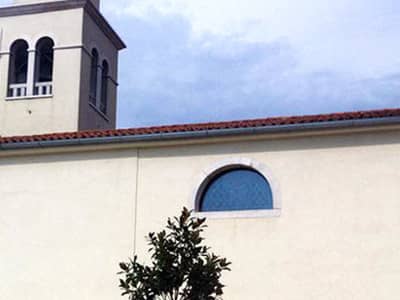
Parish church of St. Barnard is one nave building with the sacristy, built in 1621, extended in 1941 and reconstructed in 1988. The bell tower from 17th century, refurbished in the year 2000. It is 34 metres high. On the memorial plate in the church, where one of the Borisi family lies, there is a coat of arms of the noble family.
In the left side altar there is a painting of Virgin with Child, St. Dominic and St, Catherine called Our Virgin of the Holy Beads. This oil painting of an unknown artist is believed to be from the beginning of the 17th century and is painted in the manner of the early Venetian baroque. It has been placed at the altar again after restauration in 1994. Behind the altar there is a valuable painting presenting Holly Mother with a Child and saints. The painting is the most valuable work of art kept in Funtana. It was restored recently and according to the style there are two separate themes: upper image of the Holly Mother with a Child is renaissance, while the lower part of the painting presenting saints, belongs to a baroque period. The author is unknown. On the side altars there are sculptures of Blessed Virgin Mary of Sorrow, St. Bernard and St. Anthony of Padua. Above the main door there is a choir. Right side altar keeps a portrait of Blessed Alojzije Stepinac, a cardinal and Zagreb arch bishop (1898-1960), known in the world for his courage and communist punishment. This oil painting was done by Vladimir Pavlinic. Painting was blessed in 1999. Above the entrance there is a quire with organs built in 1878, a gift from the Catholics of Weinheim, Germany.
Church of St. George
Off the harbour there is the islet of St. George on which a Romanesque church bearing the same name is standing. The church, which was renovated in 1995, has a rectangular ground-plan prolonged by an apse.
Some historians have brought up theories that maybe the Roman town Ursaria was standing exactly on this islet. This opinion was based on “Tabula Peutingeriana” (a copy of a Roman map from the 3rd or 4th century) where the Roman town Ursaria was marked on an island. In the early Middle Ages an anonymous geographer from Ravenna placed likewise Ursaria on an island. There have not been any archaeological researches on the islet yet.
The Old Christian Basilica
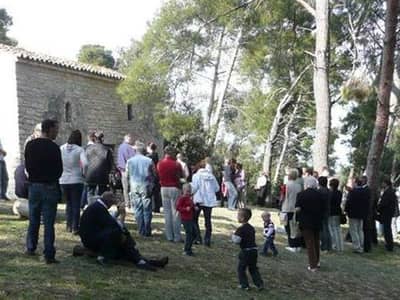
Next to the Romanesque basilica of St. Mary, in the walled-in backyard, there are remains (foundations and mosaic floor fragments) of the Old Christian basilica dating from the 4th century. Nowadays the remains of the basilica are covered with earth and are not accessible to the public.
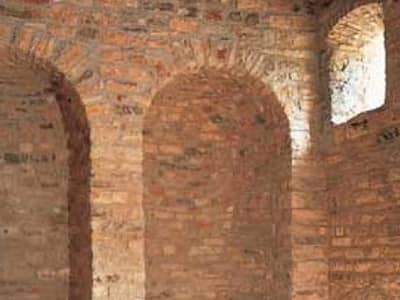
This was one of the oldest Old Christian buildings in Istria. First Christians in Vrsar (2nd or 3rd century) performed their religious ceremonies presumably in some private houses. The basilica was probably built in the 4th century, after the emperor Constantin the Great (306-337) had by the Milan edict permitted the Christians to profess freely their religion. Fragments of the basilica were excavated in August and September of 1935 by the Italian archaeologist Mario Mirabella Roberti. The basilica had a rectangular ground-plan and resembled the basilicas of the first phase of the Old Christian architecture. The baptistery (baptisterium) was also a part of the basilica, as well as the entrance-hall (nartex) on the west side. In the 6th century the basilica was enlarged by an apse (semicircular recess on the back side). The floor was covered with polychromatic mosaics. The mosaics have been preserved only in fragments, but one can still imagine their artistic entirety. They are decorated with very interesting Old Christian iconography, mostly with floral (leaves, wreaths, baskets with grapes) and animal motifs (fish, peafowls, pigeons). Images of fish originating from the Istrian sea are proof of the mosaics having been made in some Istrian artistic workshop. On them the four seasons are symbolically represented. The central mosaic field consists of 73 circles connected to each other by tresses. As to their artistic characteristics, the mosaics resemble the ones in the Theodoric’s basilica in Aquileia dating from the year 324.During invasions of the Slavs (Croats) to Istria at the beginning of the 7th century the basilica was demolished and a part of it transformed into an olive mill. Archaeological finds include Roman tegulas (tiles), coins, lucernas (lanterns) etc. By all means, the mosaics should be excavated and presented to tourists and visitors.
07

More about Vrsar
find out more
Vrsar History
Vrsar is a small fishing village at the western part of Istria coast. It is situated on the hill, which by the development of tourism started to go lower to the sea. The coastline contains the archipelago with 18th small islands, whereas the north part of the port is closed by the peninsula Montraker which became the art workshop of stonemason. This small town has grown into a tourist destination which is full of natural resources, beautiful beaches, coast, hinterland and rich accommodation offers. The long history had started in the Pre- History.
In the 1st century BC when the Romans had come, Vrsar had been an important market centre. From the 5th till the end of 8th century Istria was under the Byzantine Rule, and Slavenians had come in the beginning of 7th century and expelling the population and destroying everything what came on their way, including the Antique Vrsar. At the end of 8th century the Feudal Rule of France has started so Istria had come under the Rule of French invader Charles the Great. In the time of 10th till 18th century Vrsar was the administrative centre of the Bishop of Poreč. In 1778 the Venetian senate abolished the church shire at the area of Vrsar and Vrsar came under the Rule of Venetian Doge, and the former properties of Poreč bishops in 19th century became the property of patrician families from Poreč. After the Venetian Rule Vrsar had been under the Rule of Austria- Hungarians till 1805, when it came under the French Rule. After 1813 started the century of Austrian- Hungarian Ruleand lasted till the First World War, after what followed the Italian and German occupation and in 1947 Vrsar became a part of Yugoslavia till the 1991 when it became part of independent Republic of Croatia.
Vrsar Culture
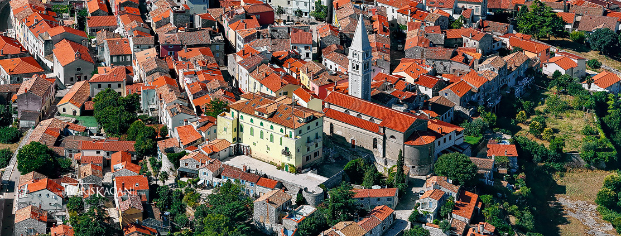
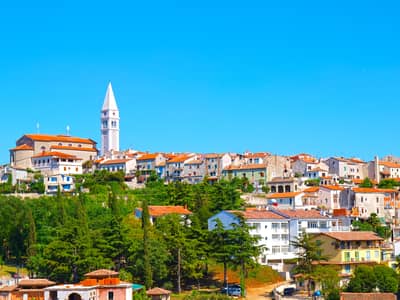
The narrow, vaulted streets of the old town lead to the city gate, small squares, stone houses, picturesque churches and three town belvederes. The view of Vrsar coastline are really charming: the most indented coastline of Istria is decorated by one of the most beautiful Mediterranean archipelagos whihch includes 18 unpopulated islands surrounded by the crystal clear Adriatic Sea. Vrsar can be proud of its florid history that dates back to the prehistoric period. It has been known for centuries for its springs of drinking water because of which it got its ancient name Ursaria (old Mediterranean word “ur” or “spring”), as well as the nearby place Funtana (fountain), also a destination for those who were seeking rest and refreshments. It is interesting to mention that even the Italian poet and adventurer Giacomo Casanova spent the summers of 1743 and 1744 in the romantic Vrsar and refers to the town in his famous memoirs. Due to salt production, Vrsar is marked on the maps of the old world, and it is possible to find the high-quality grey stone in its streets, which was used in the building of Venice itself, throughout the Roman Empire. Vrsar is recognized as well as the city of sculptors; this is the location of the famous Dušan Džamonja’s sculpture park. You can find stone sculptures all over the town, and their number grows each year after regular visits of Montraker international sculpture colony. The area around Vrsar is rich of wine grapes and olive-groves as well as shells and other sea delicacies that are farmed in the nearby protected nature park Lim Channel, which makes Vrsar one of the preferred destination for gourmets and wine lovers. Tourism is an important link in Vrsar’s economy and the town has been announced as the best tourist destination on the Croatian Adriatic several times. Vrsar is a holiday destination for all those who enjoy active vacation as well as for families. Today, Vrsar is also know for a large marina, nearby Koversada, the largest naturalist center .
Vrsar – Things to do
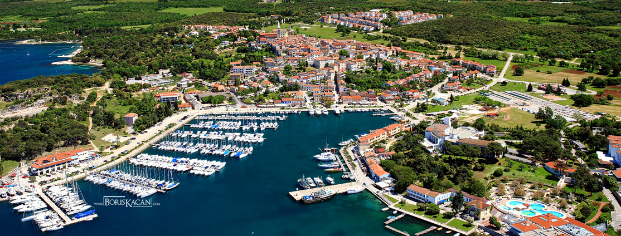
There are many remarkable monuments and landmarks in Vrsar: The Church of St. Foška, City Gate the remains of the Roman necropolis (on Montraker peninsula), the old Romanesque City Gate, the Church of St. Anthony Church, the St. Martin Romanesque, the Romanesque Basilica of St. Mary of the Sea from the 10th century, the remains of prehistoric settlement on the top of the town promenade and harbor abandoned quarries, Edo Murtić’s art gallery Sculpture park.
Vrsar – Entertainments and events
Vrsar can be pleased with its many catering facilities: restaurants, bars, bistros, pizzerias, beer-pubs, especially along the sea promenade. Those who wish to spend all night long can go to the nearby Poreč (11 km) and its clubs. The summertime in Vrsar is always full of events. From June to September Vrsar is the host of the annual music festival „Sea and Guitars“ held in the Basilica of St. Mary of the Sea and on St. Antun Square. Music lovers can totally relax with the gentle sound of traditional Croatian music. From May to September local people organize fisherman’s feasts. The crowd meets on the bright sea shore and enjoys the sounds of summer evening music with Istrian seafood specialties. Every year in September the „Montraker – summer sculpture school“ takes place in the deserted quarry. The Casanovafest an art festival of love and erotic takes place in Vrsar, as well. Resorts usually organize guest entertainment that includes day-long activities, from educational, artistic and creative to sports activities for guests of all ages.
Vrsar – Service Information
Regional Number Code 052
Police Department 192;
Fire Department 193;
Emergency 194;
Bus Station 432-153;
Airport Pula 550-900;
Ambulance 533-111;
Harbour/Ferry 811-132;
Tourist Office 441-746;
Railway Pula 541-733;
General Information 981.
Vrsar – How to reach us
You can reach Vrsar from many directions like: by bus which is connected with the nearby Poreč ; by train where the nearest train stations are in Rijeka or in Pula; by airplane where the nearest airports are on the Island Krk, in Pula and the airport in Triest; by boat which connects you with all the ports along the Istrian coast and its main port Pula; by personal vehicle with you can arrive by following the directions on the Istrian Y and is the most secure and independent way of traveling.