Discover the destination Rovinj
"Crveni Otok" Red Island (Rovinj, Istria)
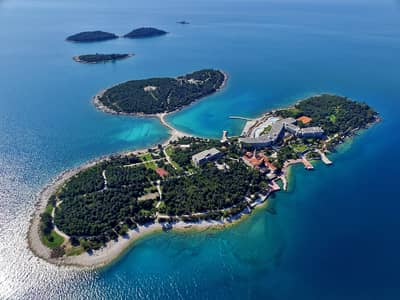
For those who are interested to explore Rovinj and its beautiful surrounding there is an island Crveni otok where is located an interesting Institute of Marine Biology. The island actually consist of two islands named St. Andrew and Maškin. Red Island Info
Lim valley (Rovinj, Istria)
The Lim valley (Limska draga or Limska dolina) is the 35 km long valley of the river Pazinčica, which transforms into the Lim bay (Limski zaljev), a 10 kilometer long estuary. Lim Bay got its name from the Latin word limes meaning border because the bay was a natural border between the two Roman provinces. The Croats sometimes call it Limski kanal (Lim Channel), due to its narrow width. The estuary is sometimes called a fjord, even if it is not in fact a fjord but a ria, because it was not carved by a glacier but by the river eroding the ground on its way to the Adriatic Sea. Lim info
The Grisija (Rovinj, Istria)
Surely among the most known trademarks of ancient Rovinj, Grisija is a picturesque cobbled and sprial street with playful shiny stone pillars.
Forest park Punta Corente (Zlatni Rt) (Rovinj, Istria)
Golden Cape (Zlatni rt/Punta corrente), Kurent Bay and Montauro Cape are situated around 1.5 km away from the town-center, south of the ACI Marina and Lone Bay. The coast is rocky for the most of the part. There are a few beaches covered with small round stones, and Kurent Bay, the most visited beach in this area, covered with gravel. Punta Corente Info
Monfiorenzo cave (Rovinj, Istria)
Near the road Rovinj-pula, about 2 kilometers far from the centre of the City of Rovinj, in the locality of Monfiorenzo, is located the quarry phantasy, a geological parc of extraordinary beauty and importance. According to expert opinion of many scientists, it is one of the most significant nature landmarks in the world regarding the karst phenomenon. The lime-stone of the quarry phantasy, give evidence for the history of the evolution of the terrestrial crust. Monfiorenzo cave info
The Palud Marsh And The Dvije Sestrice Islands (Rovinj, Istria)
The Palud cove, 8 kilometres southwest of Rovinj, is the only ornithological park in Istria. Palud is a natural depression quite close to the sea, which because of the inflow of water from the surrounding hills and uplands, as well as springs on the northern side has transformed into a swamp. Palud Marsh Info
Dvigrad
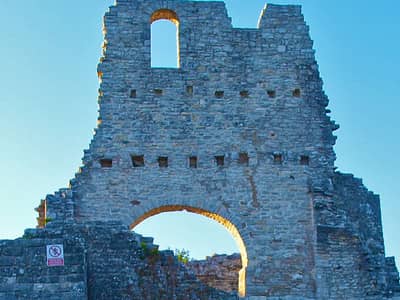
Dvigrad (Twin-town) is an abandoned medieval town in central Istria on the Rovinj – Pazin road in direction of Kanfanar. It is located in the Draga valley. The history of the settlement is prehistoric; it remained inhabited until the 18th century, after the plague the inhabitants left the village and founded a new town, Kanfanar.
During Illyrian times existed two colonies which later, in early mediaeval times, became two towns, Parentino and Moncastello. The former quickly extinct, but the latter, in the ownership of the Aquileian patriarch, developed further under the name of Duecastelli.It can be reconstructed that inside the walls people lived here and that the village and the basilica of St.Sophia existed from the 11th century. In the mid 17th century malaria and the plague were prevailing in Istria, which didn’t spare the citizens of Dvigrad either. Thus, in 1631 most of the 700 hundred inhabitants left the town, and the remaining three families left in 1714, when the church was abandoned as well. The ruins and the pulpit from the 14th century were bought into the church of St. Silvester in Kanfanara, where the inhabitants of Dvigrad had moved as well. The town is very well maintained, since it hadn’t been destroyed in the wars that were ravaging through Istria, but rather because it was abandoned by the inhabitants of the town. The town gates still exist, as well as two circles of the town walls, some of the defense towers are preserved, as well as the most part of the 200 houses. The St. Sophia Church was an early Christian church with three naves which dominated the town and which was built on solid rock. Unfortunately, because the church wasn’t maintained, it decayed in the 19th century. Until recently, the town has been left to snakes, the macchia, the north-eastern wind and to the scatters of time, but lately it is undergoing restauration, so that Dvigrad has become a must for everybody who finds oneself closeby. It is only a 20 minute car ride away from Rovinj.
The castle on the island of St. Andrija
The castle on the island of St. Andrija was originally a Benedictine Monastery established in the sixth century AD.
In the fifteenth century the Franciscan order added extensions and it was again refurbished at the end of the nineteenth century by Baron Hutterodt. The castle has now been converterd into a hotel.
Town walls and gates
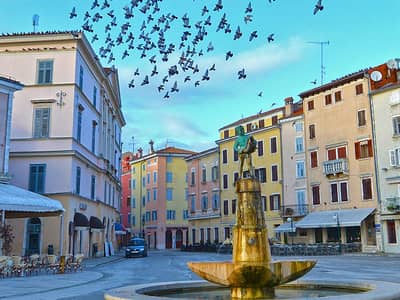
By the seventh century AD, Rovinj was already surrounded by town walls, and later strengthened by the construction of towers.
The old town had seven gates, while three still exist today: the Saint Benedict Gate, the Portico and the Holy Cross Gate. A baroque archway called “Balbijev luk”, which today serves as the entrance into the old town, was built on the site of the former outer gate in the seventeenth century.
Old Town
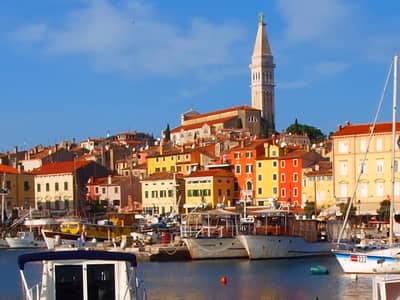
Rises up on a peninsula and is a witness to times gone by and the valuable accomplishments of its past artisans. The limited space led to the construction of narrow buildings, streets and small town squares.
Of particular interest in this town centre are the characteristically designed chimneys. The town itself was declared a cultural monument in 1963.
04
Amarin
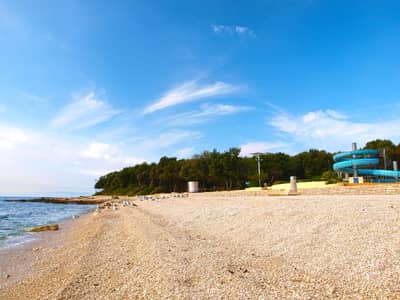
Cisterna
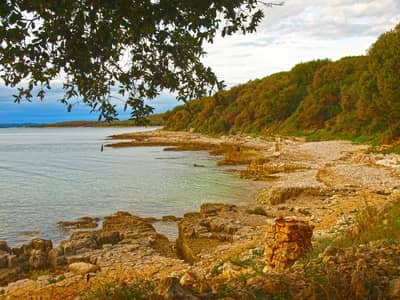
Crveni Otok
Dagita
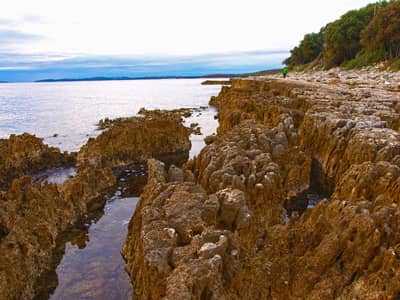
Koronsun
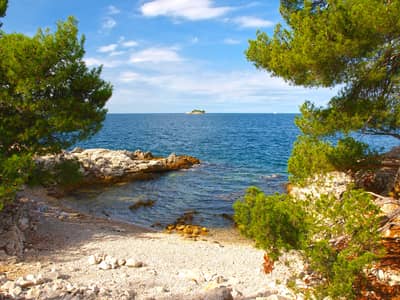
Kurent
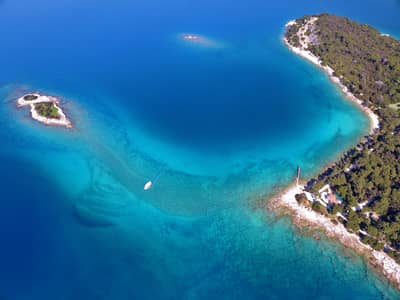
Kuvi
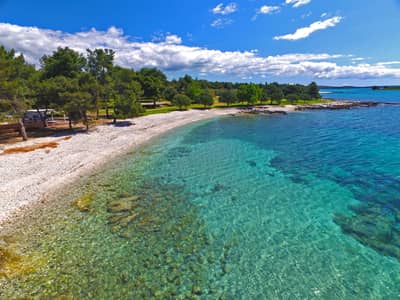
Beach Island of St. Catherine, Rovinj, Travel Guide for holidays in Rovinj, Istria
Island of St. Catherine is located right in front of the old town Rovinj and it can be easily reach by taxi boats. The beaches on the island are mostly stony. the island offers other services as well, so while spending your day on the island of St. Catherine you can swim in the pool, refresh in the bar, you can rent different sport equipment for windsurfing, diving, volleyball. On the island you can see the popular rocks called the Golden, the Silver and the Bronze Rock. These are extremely high rocks that reach 15 meters. They decline vertically into the sea that is approximately 3m deep . The rocks are an attractive site for those who like cliff jumping.
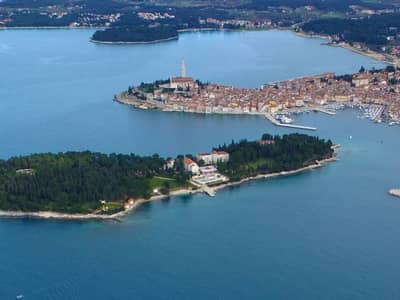
Polari
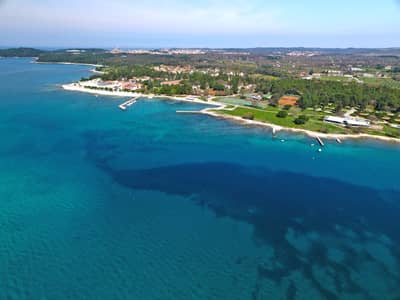
Beach Cape Babo, Rovinj, Travel Guide for holidays in Rovinj, Istria
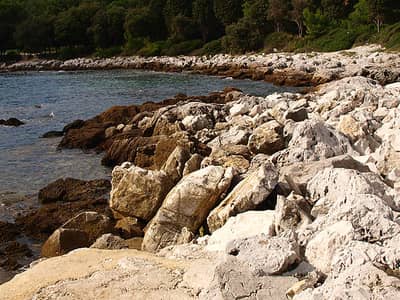
Cape Babo is locatedabout 5 km distance from Rovinj and represents the coast where the so-called wild beaches start, that is beaches, where there are no sports grounds, sanitary facilities and neither gastronomic nor other services. But, Cape Babo is located near the campsite Veštar, so the tennis field or a bar is 10 15 minutes away on foot. The beaches are mainly stony with a difficult access to the sea, but every 50 to 100 meters there are more accessible little bays that are more attractive for those people who would like to spend their summer holiday surrounded by nature, peace and quiet.
10
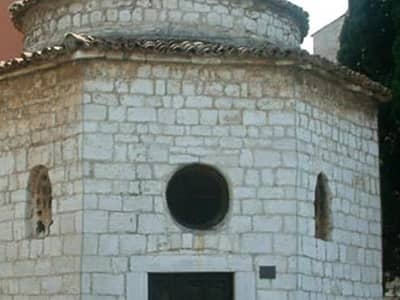
The baptismal font of the Holy Spirit
Has been constructed in a heptagonal shape and is the oldest relic situated in the Lokva Square.
The thirteenth century Romanesque church which houses the font is also interesting because of the detailed carvings of the transenna depicting scenes of Golgotha.
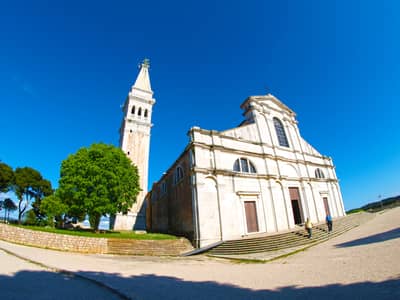
Church of St. Euphemia
Is a most imposing structure which bears the name of the patron saint of the town. It dominates the whole old town centre.
It was built in the eighteenth century, while its façade in Venetian-baroque style was added in the middle of the last century. At the top of the sixty-metre-high bell tower stands the copper statue of St. Euphemia, which shows the direction of the wind by turning on a spindle.
02

More about Rovinj
find out more
Rovinj History
Rovinj, an old but popular fishermen town surrounded by islands and islets, is situated on Istria’s west coast and it’s one of the most developed seaside resorts in Croatia. Rovinj is an important historical and cultural Istrian center. The old town lies on a conical promontory which was until 1763 part of a coastal islet. In the 18th century the channel was filled up with the mainland. In the 18th century Rovinj was the most populated town in the Ventian part of Istria after Kopar.
The town is an ancient settlement famous from the hundred years ago when the old Greeks and Romans campaigned those areas and left traces. The town was first mentioned in the 7th century as Castrum Rubini. The Romans bult the port on the island that was only 1763 incorporated to the mainland. During the century that followed the population of Rovinj has always been searched for protection from St. Euphemia. The cathedral that is dedicated to the saint dominates and protects the town. Other important treasures are: The Old Town, Baroque Municipal, the Chapel of St. Trinity, Franciscan Monastery, the Castle on the St. Andrews Island and many more. The priceless historical monument are the “Seven Old Town Gates” from which only three gates preserved the original shape. Those are; The Gate of St. Benedikt, The Gate under the Wall and The Gate of St. Cross.
Rovinj Culture
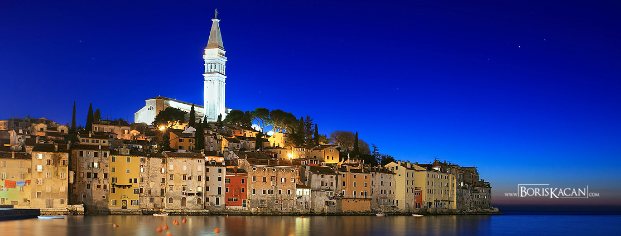
The town has a City Museum where are settled the Archaeological Collections, the Contemporary Croatian Art, the exhibitions of sculptures and paintings and many more. Besides that, Rovinj town has another museum settled in “Ruder Boskovic” Institute Center for Maritime Research. That is an Aquarium Museum over 100 years old situated in the park forest called “Golden Cape”. Visitors will be interested in an aquarium locate din the port as part of the Center for Marine Research founded in the 19th century. Moreover, the town Rovinj organizes the International Art Exhibitions during the summer. Rovinj is an important economic center with the activities related to the industry (tobacco, production of canned fish and so on), fishing.
Rovinj – Things to do
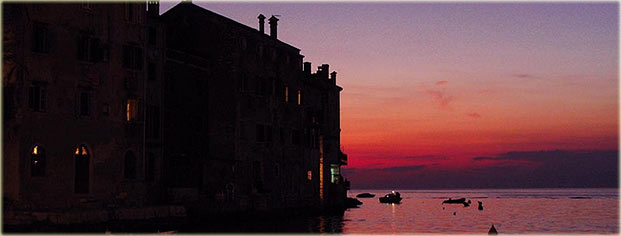
The town is an important cultural center of Istrian Peninsula. Besides all the historical characteristics, Rovinj will reveal to you its tradition and customs. Artistic town Rovinj, every year is populous with the artists and visitors from all over the world. Therefore, during the summer are placed: Traditional Organization called the “Artistic Colony Rovinj” and “The Grisija” which is a street name but also an open air gallery spread over the old town streets. Additionally, it is the annual art manifestation where are exposed the arts and stories of all the presenters under the blue sky. Aside from that, Rovinj offers many more festivals, events and happenings. During the summer are organized: The International Pop Festival; Town’s Patron St. Euphemia Day when is the traditional Great Feast organized in the open air; Rovinj Summer Festival when the local bands of traditional singing present their show; Rovinj Regatta; Hunt Club organizes hunting game and many more. For those who like to spend their evenings in the quiet surroundings, Rovinj offers its theater, The Gandusio Theater which during the whole year presents the shows and events.
Rovinj – Entertainments and events
Whenever you arrive in Rovinj town, you will find various places for amusement and fun. During the summer, the town lives up with the Rovinj “Festa” Party inviting many performers and musicians to perform on the concerts, live music bands to make an atmosphere, and places benches with the Rovinj souvenirs for the tourists. Besides that kind of party, for those who prefer the peaceful vacation, Rovinj offers concerts of classical music in the Franciscan Monastery. Additionally, the Rovinj has the biggest entertaining center in the whole Istria and broader. This Monvi Center offers many restaurants, pizzerias, ale houses, patisseries, amphitheater and disco bars. All those places are organizing dance parties, cabaret shows, live music concerts, DJ parties, summer festivals and many similar performances with the national and international performers. Other Disco Clubs and Bars are: Villas Rubin, Monte Bar, Valentino Red Island, Eva, Monte Molini. The town Rovinj has two casinos which are Automate Machine Club Istra and Adria Casino on the boat.
Rovinj offers many sport activities, interesting tours and excursions and remarkable sightseeing places. For those who like adrenalin and amusing vacation, the town provides diving clubs, underwater fishing, sailing and surfing, world regattas, kayaking and water skiing, bowling,international tennis tournaments, mini golf, basketball. Although this recreational and adrenalin activities are many, you can, besides that, make tours on the Plitvice Lakes, in Postojna cave, Brijuni National Park or Venezia. Places worth seeing are the natural treasures but of historical importance. Those are: Dvigrad, Bale, Žminj, and protected places like Limska Draga Fjord, Rovinj islands and islets, Golden Cape Park and many more.
Rovinj – Service Information
Regional Number Code 052
Police Department 192;
Fire Department 193;
Emergency 194 / 815-036;
Bus Station 811-453;
Airport Pula 550-900;
Ambulance 811-011;
Harbour/Ferry 811-132;
Tourist Office 811-566 / 813-469;
Railway Pula 541-733;
General Information 981.
Rovinj – How to reach us
You can reach Rovinj from many directions like: by bus which is best connected with cities Pula, Rijeka, Trieste; by train where the nearest train stations are in Rijeka or in Pula; by airplane where the nearest airports are on the Island Krk and in Pula; by boat which connects you with all the ports along the Istrian coast and its main port Pula; by personal vehicle fby following the roads sings on the Istrian Y which is the most secure and independent way of traveling.