Villa 2405 Rakalj is situated in Rakalj (Region Istria).
Villa 2405 Rakalj has 1 accommodation units: Villa (ID 161716).
Villa 2405 Rakalj is located 25000m from the center and 800m from the beach.
Villa 2405 Rakalj is suitable for: Family holiday. Check your appartment availability and find out the price, discounts and special offers. We Guarantee you the best possible price.
Book online!
Villa (ID 161716) has 6 beds (basic beds: 6 and extra beds: 0).
The area of the apartment is 115m2 and is situated on the 0 floor.
Villa (ID 161716) has: Internet, Tv.
More info about equippment here.
Price Villa (ID 161716) is from € 216.00 to € 444.00.

General info
Location
-
Settlement type:Inhabitated, Quiet location
-
Greenery:Medium
-
Isolation
-
Main Road Before Beach
-
Access By Car
-
By The Beach
-
Beach type:Pebble, Stone, Concrete
-
Beach access:Short shoal
Distances
Discover destination Rakalj
Rakalj, located in the northeast of Pula and 12 km northeast of Marčana, is a small town on the west bank of the Raša bay. Residents deal with traditional agriculture,livestock farmine, mining of building stone in the surrounding areas.
First mentioned in 1190, Rakalj was once known for its traditional Istrian pottery, a tradition now revived for tourism purposes. It was popular for its experienced sailors and fishermen. Rakalj attracts visitors for its cultural and historical sights such as the Baroque parish church built in the 18th century, the Rakalj castle ruins as well as the ethnographic collection placed in the native home of scholar and writer Mijo Mirkovic (Mate Balota). Stari Rakalj (Old Rakalj), is located nearer to the sea on a small hill along the Raška bay. Next to the ruins of the Old Rakalj is the church of St. Agnes from the year 1495. The location and its surroundings is rich in flora and fauna, and as such is appropriate for rural tourism, hunting and hiking. Rakalj offers beautiful a countryside, the sea, the sun and the quiet away from the crowded seaside resorts. Many untouched beaches (located 3 km away) are hidden from view, providing a sense of freedom and intimacy. While staying in Rakalj do not forget to visit other famous tourist destinations in Istria such as Pula, Rovinj, Umag and Poreč.
Beaches
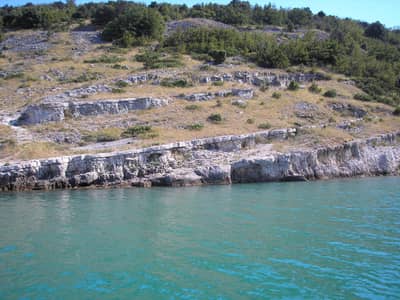
Rakalj
01
Things to do & see
Bijeca
Rt Kamenjak
_thumb_400x300.jpg)
Duga Uvala
Kavran
Rakalj
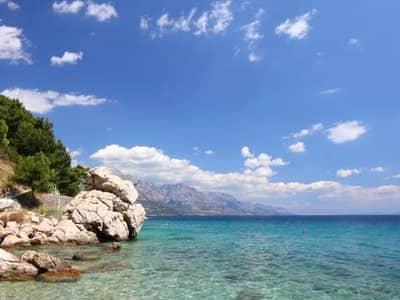
Rakalj, located in the northeast of Pula and 12 km northeast of Marčana, is a small town on the west bank of the Raša bay. Residents deal with traditional agriculture,livestock farmine, mining of building stone in the surrounding areas.
First mentioned in 1190, Rakalj was once known for its traditional Istrian pottery, a tradition now revived for tourism purposes. It was popular for its experienced sailors and fishermen. Rakalj attracts visitors for its cultural and historical sights such as the Baroque parish church built in the 18th century, the Rakalj castle ruins as well as the ethnographic collection placed in the native home of scholar and writer Mijo Mirkovic (Mate Balota). Stari Rakalj (Old Rakalj), is located nearer to the sea on a small hill along the Raška bay. Next to the ruins of the Old Rakalj is the church of St. Agnes from the year 1495. The location and its surroundings is rich in flora and fauna, and as such is appropriate for rural tourism, hunting and hiking. Rakalj offers beautiful a countryside, the sea, the sun and the quiet away from the crowded seaside resorts. Many untouched beaches (located 3 km away) are hidden from view, providing a sense of freedom and intimacy. While staying in Rakalj do not forget to visit other famous tourist destinations in Istria such as Pula, Rovinj, Umag and Poreč.
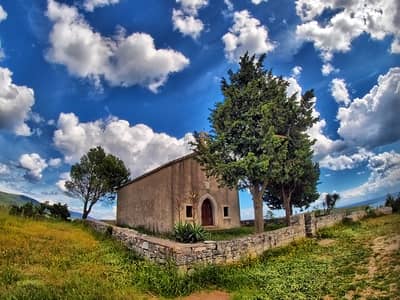
Krnica
Krnica (Carnitia) is located in the inland Istria, about 25km southeast of Pula, on the regional road toward Pula. In the past, it was called St. Mary of Krnica.
The inhabitants’ economy is based on agriculture (vines, cereals, vegetables), fishing and service industries. Archaeologists have found evidence of settlements in prehistoric and Roman times. The village was abandoned because of wars and pestilence and re-inhabited in the 1520th by refugees escaping from the Ottomans from Dalmatia, under the guidance of the priest Ivan Buršić. The port Krnička Luka had access to the sea and that’s the reason why in the first half of the XX century has become one of the most important settlements of Vodnjan municipality. It had a good port for the export and import of goods. The parish church of St. Roch was built in 1631. In Krnica are two other small churches, St. Joesph and St. Valentina. In the nearby you can find Duga Uvala, the well-known summer vacation and tourism settlement with a high quality offering, is located only 3km from Krnica which makes it an appropriate vacation destination for those who are in search of peace and beautiful nature and do not consider driving to the beach an inconvenience. The intriguing coast and submarine areas are perfect for scuba diving and Krnica is the ideal starting point for scuba tours of the nearby aquatorium. On August 16th Krnica celebrates St. Rocco (celebration in the streets), however, there are various other celebrations as well, like in Marčana where “Petrovo” is celebrated on June 29th , Mutvoran celebrates St. Mary Magdalena on July 22nd and Rakalj which celebrates “Svetica” on September 8th.
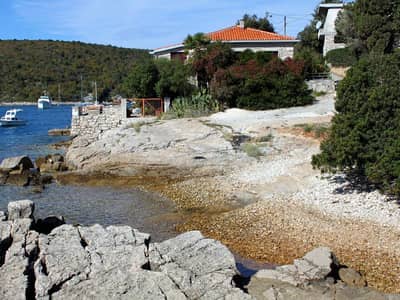
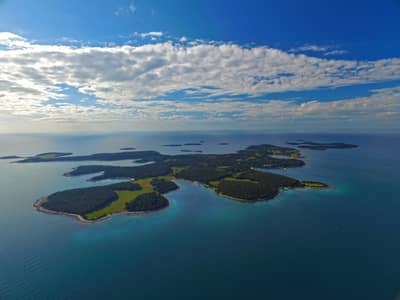
Brijuni
The Maker wanted to shape a part of the Earth as an image of Heaven. That is how Istria was born and how like a garden covered with marvelloust trees and wide meadows, washed by the deep blue sea, appealing people to a happier life. But the jealous devil destroyed his work by tearing the sack where the angel was carrying the unused stones. Thousands of rocks spread around the Istrian land making it a land of contrasts, gentle and rough, fertile and barren, sunny and cloudy.
The unhappy angels gathered the pieces of Heaven remaining among the scattered rocks and protected them by the sea waves and that how Brijuni was created. The Brijuni archipelago extends along the south west coast of the peninsula of Istria. The islands consist of two large islands, Veli (big) Brijun and Mali (small) Brijun plus twelve other smaller islands. For travellers from all around the world, National Park Brijuni has become one of their favourite holiday destinations with its incredible beauty, and mild climate since the beginning of the 20th century. The coas of the island is mostly low and rocky, but very accessible, with a few sandy and pebble bays. The colourful islands have been attracting people since ancient times for its tranquillity and natural beauty. The islands have been populated since the Roman age, and the remains of many luxurious Roman villas prove to the fascinating beauty of the archipelago. The most significant of the remains on the islands are in the bay of Verige, part of which were found temples to the god Neptune and the goddess Venus. On the west coast of the island of Veli Brijuni, in the gulf of Dobrika, the Byzantine castles and the basilica of St. Mary are located. These ruins confirm the existence of settlements from the 16th century. The white villa on the island in Veli Brijuni was the residence of Joseph B. Tito, during his reign as presidents of Yugoslavia and there he received many public officials and delegates. As he was an animal lover, he received many as gifts from visitors from all parts of the world. Today there are more than 600 indigenous plant species, mostly Mediterranean, and in the northern part of Veli Brijun there is a safari park where there are deer, zebra, ostriches, giraffes and other animals. Golf lovers can enjoy playing and nature. By renting bicycles at the park the guests can experience the park in a different way.
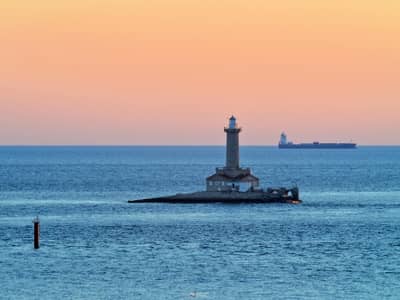
Porer
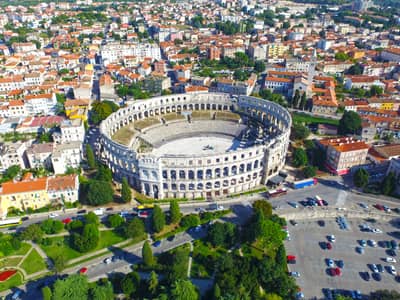
Amphitheatre (Arena)
The most famous and important monument, the starting and ending point of every sightseeing tour is the Amphitheater, popularly called the Arena of Pula, which was once the site of gladiator fights. It was built in the 1st century AD during the reign of Emperor Vespasian, at the same time as the magnificent Colosseum in Rome.
The ground plan is elliptical, the longer axis measuring about 130 m and the shorter one about 100 m. Gladiator fights took place in the central flat area called the arena, while the spectators could sit on the stone tiers or stand in the gallery. It is believed that the Amphitheater could seat about 20,000 spectators. Local limestone was used for its construction. In the Middle Ages it was the site of knights tournaments and fairs. Today it is the venue for summer performances - the Film Festival, Opera Season, Equestrian Festival, concerts, ... which can seat about 5,000 spectators. The underground passages, once used by the gladiators, nowadays host a regular exhibition of viticulture and olive growing in Istria in ancient times. The exhibits include reconstructions of machines once used for the production of olive oil and wine (mills, presses, vessels) and amphorae used for storing and transporting olive oil and wine. The Amphitheater is situated outside the old city walls because of its size and geographical configuration. The road that leads to the center was constructed during Emperor Vespasian, after whom it was named - Via Flavia. Even today it represents one of the main city roads.
09