Tourist resort 456 Umag is situated in Umag (Region Istria).
Tourist resort 456 Umag has 1 accommodation units: Mobile home for 6 persons.
Tourist resort 456 Umag is located 9000m from the center and 350m from the beach.
Tourist resort 456 Umag is suitable for: Beach front accommodation. Check your appartment availability and find out the price, discounts and special offers. We Guarantee you the best possible price.
Book online!
Mobile home for 6 persons has 6 beds (basic beds: 4 and extra beds: 2).
The area of the apartment is 24m2 and is situated on the 0 floor.
Mobile home for 6 persons has: Tv.
More info about equippment here.
Price Mobile home for 6 persons is from € 63.71 to € 375.64.

General info
Location
-
Settlement type:Near the beach, In a tourist settlement
-
Greenery:High
-
Isolation
-
Main Road Before Beach
-
Access By Car
-
By The Beach
-
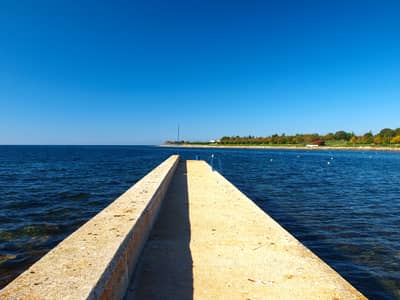
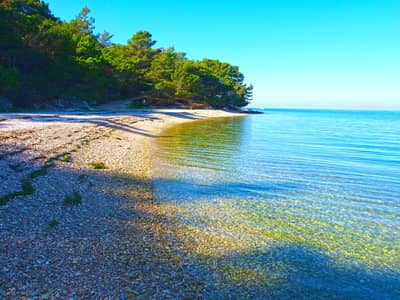
Beach type:Concrete, Pebble
-
Beach access:Short shoal
Distances
Discover destination Babići
Welcome to Babići, a picturesque place in the interior of Istria. Although Babići is near Umag (9km), the town of the tennis playing and active vacation, Babići has preserved an authentic rural atmosphere and unspoiled folk customs.
If you come to Babići you will have quite different holidays, next to the sea but at the same time with the possibility to go hunting and riding in the neighbouring areas which are well-known for such activities. Food, rich in taste and scent is prepared in the traditional way, prepared according to centuries-old recipes.
Beaches
Kanova
01
Things to do & see
Kanegra
Laguna Stella Maris
Savudrija
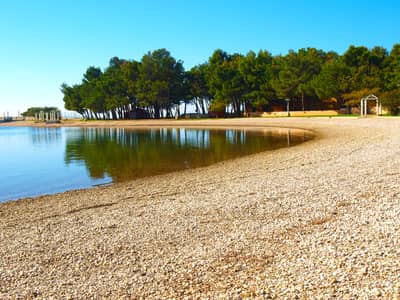
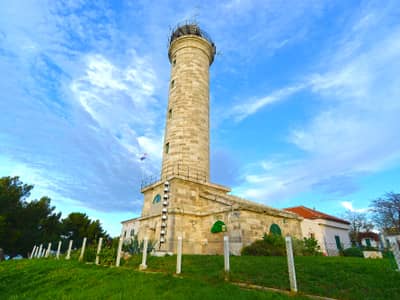
Savudrija is a small fishing place located on a small peninsula, only 9km from Umag. Its trade mark is an old lighthouse, built in the name of love between an Austrian nobleman and a local girl. It is famous for numerous historic findings – ancient history, in the Roman, Medieval period.
The old fisherman’s town of Savudrija is the westernmost point of Croatia. It is the first tourist resort one comes across when visiting the Croatian part of Istria. It was named, according to the legen, after the German emperor Barbarossa – Otto – who during the sea battle in Savudrija in 1177 against the allied fleet of the Pope Alexander III tried to hide in a water cistern. ‘Salvo re’ (the saved king) turned into toponym Salvore or Savudrija. It was originally used as a health resort by the Austrian,since Savudrija is continually refreshened by circulating sea breezes which makes its offshore waters ideal for windsurfing.
Savudrija has been inhabited since ancient history and has a natural phenomenon: stone surfaces on the shore which enter the sea at a mild angle. It is perfect for numerous sports such as cycling, trekking, jogging and surfing. The coast of Savudrija is overgrown with pine trees . It is attractive to the nudists because of the FKK beach located to the south of the very center of the place. Savudrija is famous for its pleasant restaurants and attractive beaches, so we recommend it to families who enjoy rocky beaches. Savudrija hosts traditional manifestations such as the St. Mary Magdalene festivity in Zambratija ( end of July) and Savudrian nights ( in August). Bike trails pass by numerous historical remains of Roman buildings and a rich gastronomic offer are only some of the attractions for summer holidays in Savudrija. Savudrija’s most famous feature attraction is its lighthouse, built in 1818. It has a truly elegance and is surrounded by a restful Mediterranean garden. Tourists can visit the lighthouse or even stay in the Savudrija lighthouse.
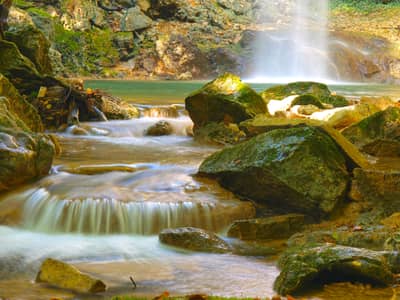
Waterfalls Butori ponor
Waterfall is fenced, and the path to its base is decorated and protected by a fence so that you can easily put down. Slap on the river Arđila and below the falls and gorge.
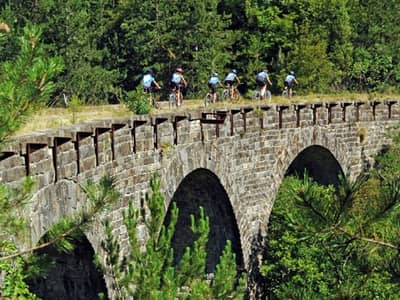
Parenzana
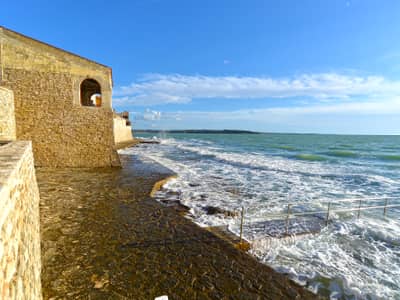
Belvedere
This is the only loggia in Istria that is situated by the sea. It probably rests on an older part of the defensive walls (ruins of a tower). Presumably constructed in the 16th century, the Loggia was renewed in the years 1860 and 1930.
Originally it had a hipped roof. To the West of the Loggia, the vaulted passage Porta a marina leads to the sea. The keystone of the arch bears the date 1649, but the entire construction was moved to this place from its original location in the north-western part of the city at the time of the establishment of the new city park in the 19th century.
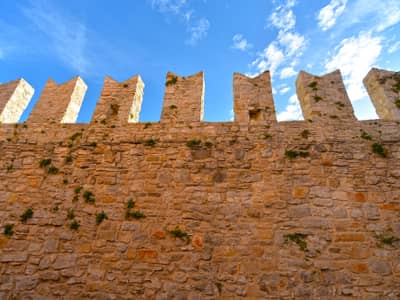
The City Walls
The historic core of the city once was entirely enclosed in walls, the course of which remains visible today only in their remnants. In the 13th century, with the fall of the city and its environs to Venice, the walls were erected it is generally believed on the remains of Late Antique fortifications.
They were the work of local master builders, which, in lengthy and persistent labour, at first constructed low defensive fortifications, and later, in their traditional manner, erected high walls with the characteristic battlements, made of cut quarrystone. The walls were renewed repeatedly. An older square tower stands next to the former city gate, while the round towers stem from the Renaissance. The latest restoration works on wall fragments lining Prolaz Venecija and the seashore side of the Brolo Park were carried out in 2004/05.
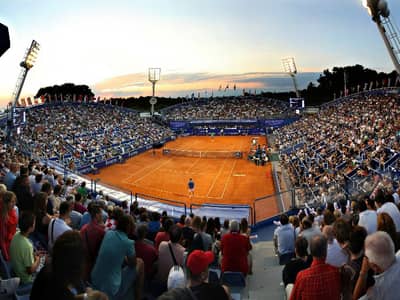
Tennis Umag
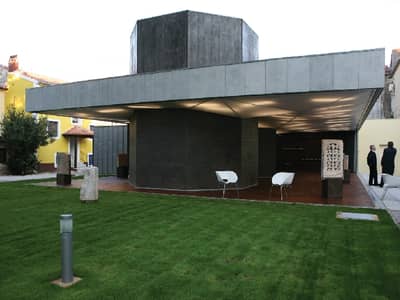
Stone Collection of the Lapidarium Museum
The stone monuments of the Novigrad Lapidarium Museum are cultural goods of national importance. The main collection consisting of 101 pieces was enlarged in recent years with new finds made during the latest conservation works in the crypt, and with the Urizzio collection of stone monuments that were formerly kept in the yard of a family house.
The museum collection comprises architectural elements (door sills, lintels, openwork window panels, coats of arms, etc.) and to a large degree liturgical inventory (altar plates, ciboria fragments, pilasters, capitals, etc.), originating from between the 1st and the 18th century. The most significant holdings of the Novigrad Lapidarium Museum belong to the collection from the Early Middle Ages, including the well-preserved Mauritius Ciborium from the end of the 8th century, a rare example of Early Carolingian art in the region. Between 1964 and 1993, the collection was housed on the ground floor of the Rigo Palace. From 1994 to 1998, it was in storage, and during this time the exhibits were conserved and restored. Today, the valuable collection is housed in the Lapidarium Museum, where its most outstanding pieces are on permanent display. The museum building was designed by the Randiæ- Turato architectural office from Rijeka and constructed in 20032006. Representing a successful combination of the old and the new, with its modern concept the building not only provides a suitable frame for the exhibits, but also contributes to the revitalization of the city centre.
09