Odkryj cel podróży Rabac
Beach Girandella (Rabac, Istria)
The Beach Girandella is located under the same name touristic settlement where are offered many touristic contents, bars, restaurants, sport fields and shops. The beach is covered with rocky and concrete parts. The Blue Flag waves on this beach, as well. Here you can rent different sport equipment, deck chairs and umbrellas. Here, in this beautiful location it is organised the Traditional Summer Festival of Electronic Music. Beach Girandella info
Labin, Istria
Labin ,the medieval town, is situated on the hill above Rabac. The old name – Albona- was first mentioned in 285 AD. Here in this little town was born Matthias Flacius Illyricus, the reformer and collaborator of Martin Luther. Today is Labin a cultural and administrative center . The cultural and architectural heritage live uo thanks to the many art ateliers and by the bustling youth gathering in the coffee bars spread around the old town. Labin Info
The Church of Saint Andrija (Rabac, Istria)
The Church of Saint Andrija dates back to the 15th century. Inside it can be seen an altar with the statues of Saint Mihovil, Saint Juraj, St.Peter and St. Paul. The bell tower near the church is 35 meters tall. The Church of Saint Andrija Info
Beach Maslinica (Rabac, Istria)
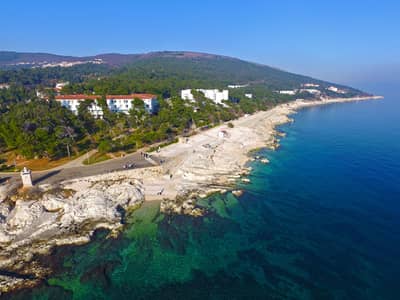
The Beach Maslinica is a long pebbled beach where waves the Blue Flag. Not far from the beach you can find many accommodation facilities, bars, restaurants and sport fields. There are entertainment contents and rental of water- sports equipment. One part of the beach has been adapted for people with special needs. Beach Maslinica Info
Raša, Istria
Raša is the youngest town in Istra. On the personal initiative of Mussolini, the town construction started in the middle of 1936. At this time the town was built in order to accomodate the miners and mining. It was named after the river that flows through the settlement. Even if today Raša is white because of the stone and concrete, Raša was in fact built of coal. The town square is dominated by St. Barbara church, the patron of all miners. The church itself is shaped like an upturned coal-mine cart, while the church tower has the shape of a coal mine lamp. Raša info
Battiala-Lazzarini
One of the most beautiful buildings in the old heart of Labin, and also one of the best preserved and most representative Baroque palaces throughout Istria, is surely the Battiala Lazzarini Palace. The building captures the attention with its size and surface area of almost one thousand square meters and the abundantly decorated façade of reddish colour and with blue windows. It was built by the Battiala family, partly during the 17th and partly during the 18th century, and later on it was thoroughly renovated and reconstructed by 1994. The Palace has been nationalized after World War II. A boarding school for pupils was first opened in the Palace and then turned into apartments, and since 1960 the Labin Folk Museum has been located within the building. The museum is adorned by a rich archaeological, ethnographic, cultural and historical collection and a unique replica of a mining horizon which is worth seeing. The first owners of the Palace, the Battiala family, were of Turkish and Albanian descent, and they settled in Labin in 1727. In the 19th century Margherita Battiala married Lodovic Lazzarini and it was that very marriage that marked the beginning of the Labin part of the Battiala Lazzarini family. The Lazzarini family moved to Istria from Tuscany as early as in the 14th century. They were later awarded the title of barons. The last owners of the Palace werethree brothers: Giuseppe, Nicolò and Tommaso. The family coat of arms, which can still be seen within the Palace, contains the symbols of immortality, the phoenix bird and the saying “Moriendo renascitur”.
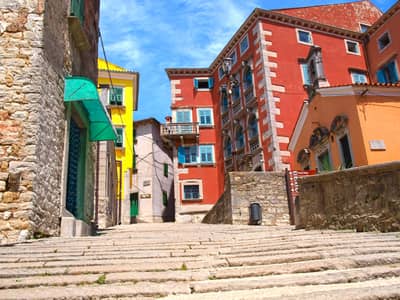
Loggia Labin
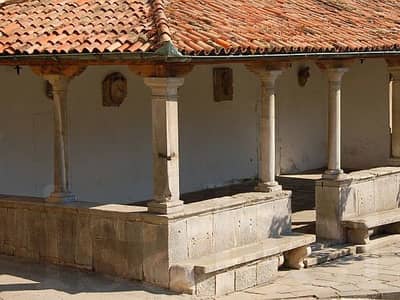
Town loggia was a center of life in the past where news and court verdicts were read out. Peasants danced there every Sunday and on fair days. Built in 1550, it later got a collection of stone monuments. Pillar of shame in front of the loggia.
Porta Sanfior
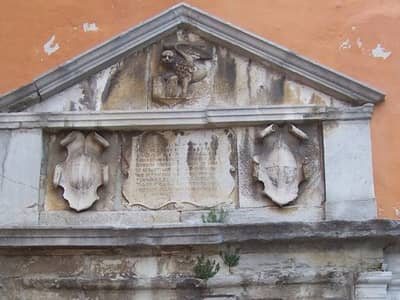
Porta Sanfior - main town doors of St. Flor dating from 1589 with Labin coat of arms and the Serenissima lion above. Canon dating from Austrian times was put up for the second time on the bastion (torjon) in 1995.
The gates of St Flor in Labin are the actual entrance to the old town Labin. The gates were completed in 1589 and above them are the Labin coat of arms and the Venetian Serenissima Lion which symbolises the Venetian rule
03
Lanterna
Maslinica
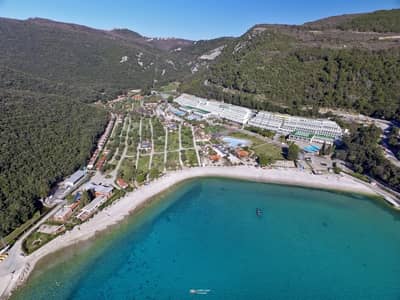
Plomin Copacabana
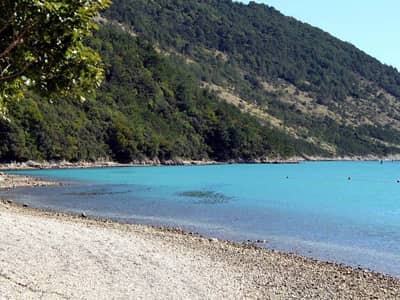
Ravni
Ravni is a small and quite place on the eastern side of the Istrian coast near Rabac. There is never crowded so you can take a peaceful rest in a complete harmony with the nature. Beaches arepartly paved and partly pebbly and that's why it is the favorite beach for many locals. Ravni is a famous destination for surfers because of perfect winds. Clean and deep sea attracts a many divers. Ravni is an ideal choice if you want to take a rest from city rush and enjoy the clean nature.
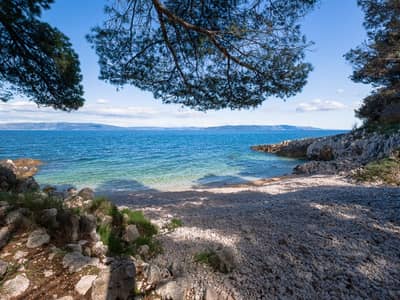
St.Andrea
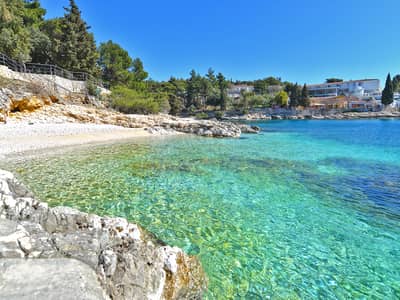
Sv.Marina
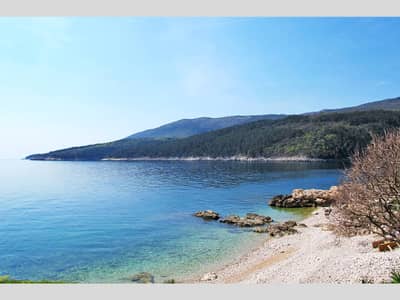
Town beach Rabac
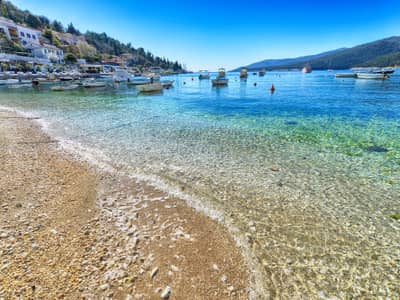
Trget
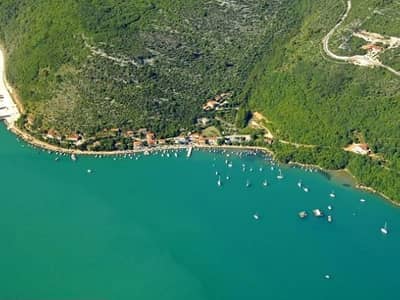
Tunarica
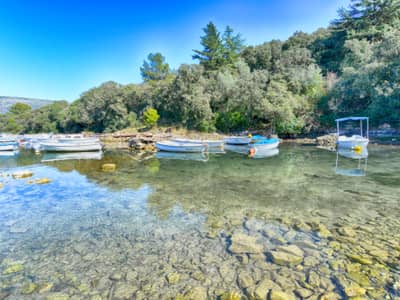
09
Crkva Rođenja Blažene Djevice Marije
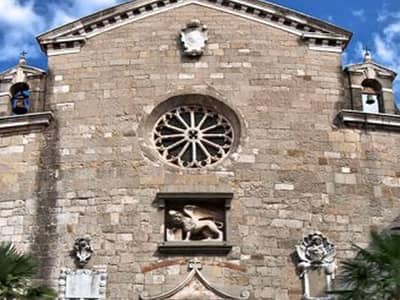
Three-nave church of Blessed Virgin Mary's Birth built in 1336 on the foundations of the small church from the 11th century. It was reconstructed several times. The last reconstruction was in 1993. A Venetian lion with a sphere in his mouth - a symbol of Labin recognizing the Venetian government - was put on the front facade in 1604.
By the end of that century, in 1688, a baroque statue of senator Antonio Bollani, a combatant against Turks, was put on the same facade. The bust is one of the most beautiful examples of the secular sculptural art of Istria in the 17th century. On the right from the church, there is a palace which belonged to the Schampicchio family. Church of the B. V.Mary’s Birth decorated with six marble altars. One of them has St.Justin’s relics brought here from Rome in 1664. Main altar and altarpiece with six figures of B.V.M., St.Pauline and Saints: Justin, Sergio, Julian, Tom and Jacob. The author is Natale Schiacione from Dalmatia, the much more valuable altarpiece by the altar of the Madonna of Carmel from the l7th century is believed to be done by the famous painter Jacopo Negriti, better known as Palma the Younger. Valentin Lukas, a young Labin painter from the 19th century; is the author of the painting featuring the Stages of the Cross.
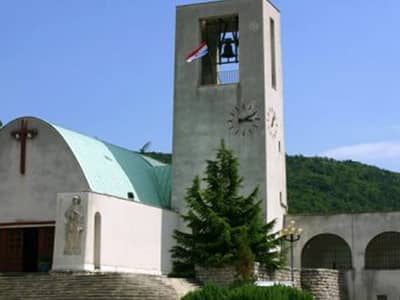
Crkva sv. Barbare
The town square is dominated by St. Barbara church, the patron of all miners. The church itself is shaped like an upturned coal-mine cart, while the church tower reminds of a coal mine lamp.
Church arcades resemble coal mine galleries as well.
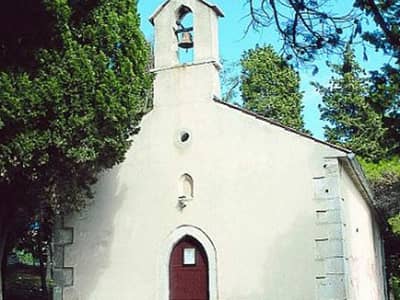
Crkva Svetog Andrije
St. Andrea's Church from 15th century, is the oldest building heritage in the resort.
Tourism in Istra, as well as in Rabac, started growing increasingly at the beginning of 60’s of the last century, when numerous hotels, campsites and private accommodation have been built.St. Andrew’s church – dates from 15th century,the oldest surviving building in Rabac.Rabac is ideal for those who expect friendly welcome, comfort and accommodation in beautiful natural environment.
03

Więcej o Rabacu
dowiedz się więcej
Rabac – historyczne
Rabac jest głównym ośrodkiem turystycznym na wschodnim wybrzeżu półwyspu istriańskiego, około 40 km od Puli i tylko 5 km od Labina. Rabac urosło od małej miejscowości rybackiej do resortu i uważane jest za perłę Kvarnera ze względu na swoje naturalne piękno i przyjemne laguny.
Pierwszy hotel, Hotel Quarnero został wybudowany w 1889 roku. Hotel miał tylko kilka pokoi i pub na parterze. Kaiser, austriacki oficer, który był zwykłym klientem tego pierwszego hotelu, kupił później Dubrovę, obszar niedaleko Labina. Dziś w Dubrovie odbywa się Sympozjum Śródziemnomorskich Rzeźbiarzy, jest tu coraz bardziej znany park rzeźb.
W 1925 r. w okresie rządów włochów, w centrum Rabac został założony i otwarty pierwszy większy hotel nazwany „Trieste" – dziś jego nazwa to „Primorje". Pojemność hotelu nie mogła zaspokoić rosnącego zapotrzebowania turystów, głównie z północnych Włoch. Dlatego też przeprowadzono bardziej intensywny rozwój prywatnych kwater. Turystyka na Istrii, a także w Rabac zaczęła się rozwijać w latach sześćdziesiątych. W tym czasie wybudowano wszystkie hotele, apartamenty, kempingi oraz większą część prywatnych domów. Wśród stałych gości najliczniejsza jest grupa niemiecka i austriacka, a po niej Anglicy i Włosi.