Odkrijte destinacijo Poreč
Euphrasius basilica (Porec, Istria)
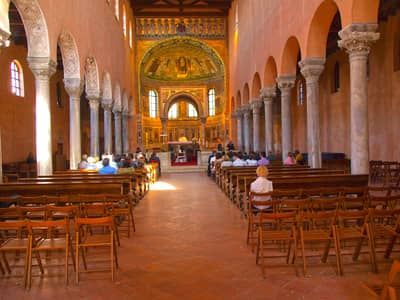
The Euphrasius’ Basilica is the Cathedral of the Ascencion of Maria, but is because of Bishop Euphrasius, who built it, better known as the Euphrasius’ Basilica. The interior and façade of the church are made with glorious mosaics and belong to the most beautiful protected parts of the Byzantine masterpiece from the 6th century. The church shines from mosaic diversity. Euphrasius basilica Info
The Baredine cave – Nova Vas (Porec, Istria)
In the underground world of the Baredine Cave you can see a treasure of unique sculptures, stalactites and stalagmites shaped over thousands and thousands of years by the amazing play of nature. The Baredine Cave is a protected natural and geomorphologic landmark, as well as the first caving site of Istria where, from this year on, you can see a historic exhibition of tractors, an exhibition of bread and oil, and a wine bar. Baredine cave Info
Plava Laguna (Blue Lagoon)
Plava Laguna Resort is known for its beauty, and the peace and quiet that surround it make it ideal for a peaceful and relaxing vacation in Istria. This scenery was shaped for long walkings by the sea, lounging on the beach and for relaxing the mind and soul.
Zelena Laguna (Green Lagoon) (Porec, Istria)
In terms of high standards and a wide range of facilities, Zelena Laguna is a unique resort in both Istria and Croatia. This magnificent landscape of pure beauty hides a number of different hotels, campsites and apartments. The only thing you need to do is come and enjoy yourself.
Materada Area (Porec, Istria)
Nature was exceptionally unselfish in the north part of Poreč where Materada Area is located. All the facilities of Materada Area are surrounded by green areas and the only thing standing between them and the nearby sea are attractive beaches and sunning areas.
Main street Decumanus (Porec, Istria)
Decumanus connected the square Marafor in the western part of old city with city gates at its eastern end. Roman Forum with Temples dedicated to Roman gods was located on the Marafor square. There is still today a Romanic house and a few beautiful Venetian gothic palaces.
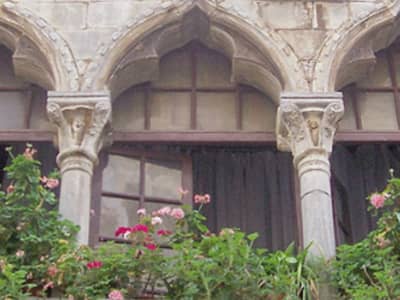
Gotička kuća
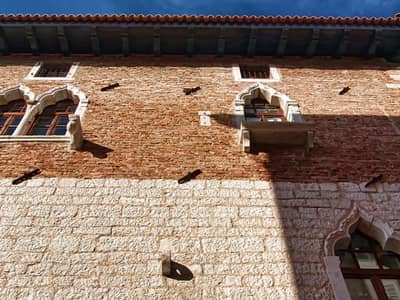
In the main old town street, Decumanus, there's a house where you can see: two trifora.
The Gothic Palace was built in 1473 in gotico fiorito Venetian architectual style. In this period of its life Poreč was undoubtfully a home to quite a few wealthy families that didn’t mind paying a lot for their houses to be as nice and modern as in Venice. A number of such palaces is preserved.
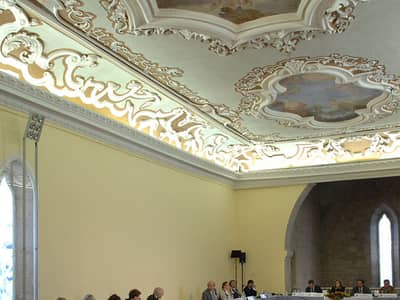
Istarska sabornica
Originally a Gothic Franciscan Church from the 13th century. It stands between Park Juraj Dobrila and Laginja's shore. The interior of the building was made into Baroque style in the mid 18th century. On the ceiling there is Baroque plastering with illusionistic frescoes in medallions.
During the last century this building was used for assemblies of the Istrian Parliament and even today the District Parliament holds its formal sessions there, as well as the choir concerts ‘Naš kanat je lip’ and painting exhibitions ‘Annale’. Last spring, in the courtyard behind the Assembly Hall, early Christian floor mosaics were found, probably from the church of S.Thomas the Apostole.
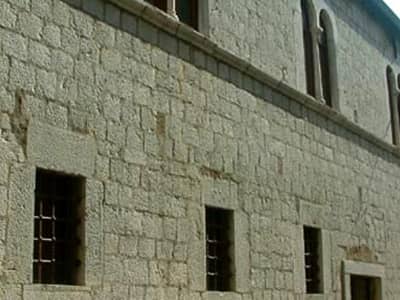
Kanonika
A monumental building of the canonic was completed in 1251.
Some say that it is one of the best examples of Roman construction.
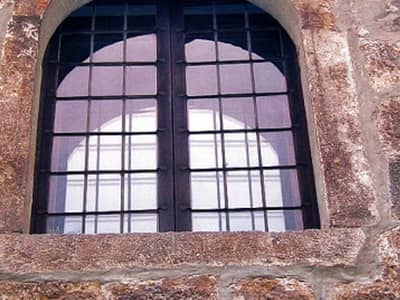
Kuća Dva Sveca
The facade of small Romanesque house accentuated by two relief figures of saints.
Built in the 14/15th century in a Romanesque style. It derived its name from the two stone relief figures of the two saints alongside the window on the last floor. On the ground floor a large stone arch stands out.
Marafor, forum romanum
In the 1st century it pride itself with the biggest Roman sanctuary in Istria. Mart's temple or the Big temple was one of the biggest on the Adriatic.
North of it there is the ruin of Neptune’s temple. The Marafor Square, Poreč’s oldest and biggest square, a Roman forum rectangularly shaped is near the temples.
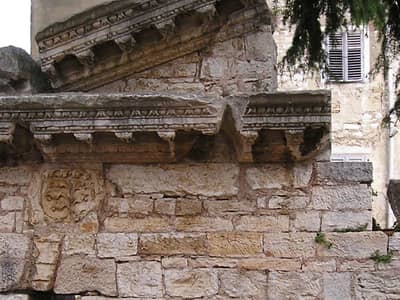
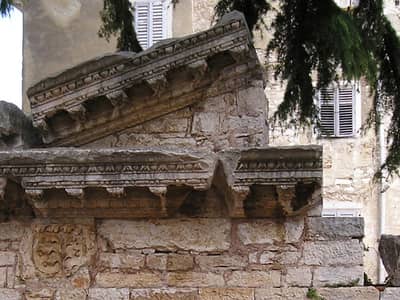
Neptunov hram
The Great Temple – northwest of the Marafor Square. The remains (a part of the wall and foundation) of an ancient temple from the beginning of the 1st century.
The Temple of Neptune – in a park, west of the Marafor Square, only fragments of the ancient temple, which was dedicated to the god of the sea, Neptune, are preserved.
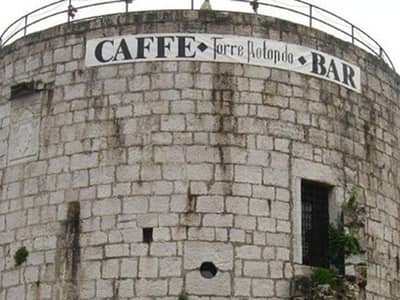
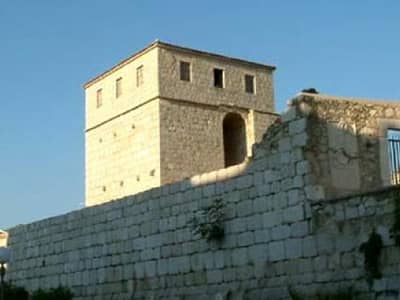
Okrugla kula
Stands near Narodni trg (Public Square), built in the second half of the 15th century.
It is very well preserved and a visit to the terrace on top is possible.
It is very well preserved and a visit to the terrace on top is possible.
Palača Zuccato
Matija Gubac Square used to be called Piazza dei signori in Venetian times but only one row of the palaces have been preserved, among them a nice example from Gothic and from Baroque period.
Along the most beautiful street in Poreč, Decumanus, stretch two galleries, one at Zuccato Palace and the other, the Heritage Museum of Poreč and Its Surrounding Area.
Peterokutna kula
Located at the beginning of the central street, Decumanus, at the entrance of the heart of the old city. It was erected in the mid 15th century in Gothic style, with a relief of a Venetian lion on the facade.
Up until the French occupation, parts of the city gates were preserved all the way up to the tower.
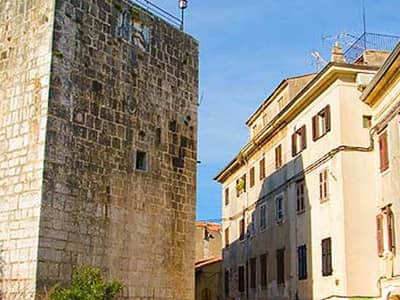
Sjeverna kula
Alongside the Peškera bay, northeast of the heart of the old city. It was built in the 15 century. Today the edge is still partly preserved.
Between the three towers, as well as around the peninsula, there used to be the City’s ramparts. Parts of it are still best visible from the board-walk along the northern side of the City. The City was detached from the mainland by a trench.
10
Bellevue
Bijela Uvala
Borik
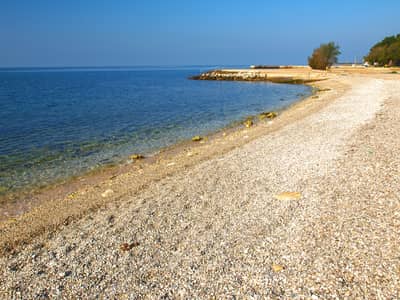
Brulo
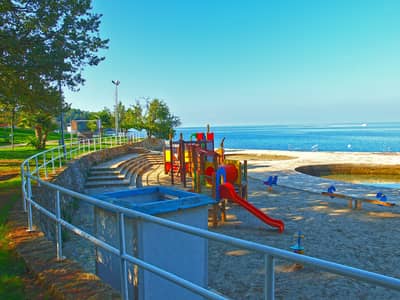
Delfin
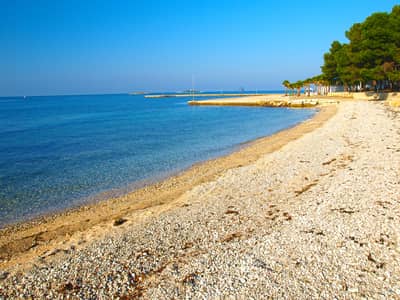
Donji Špadići
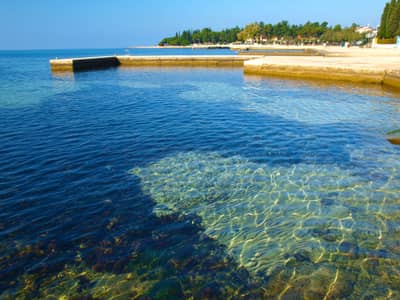
Galeb
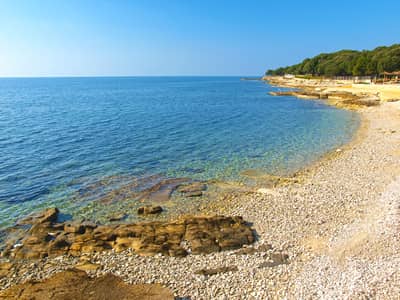
Galijot
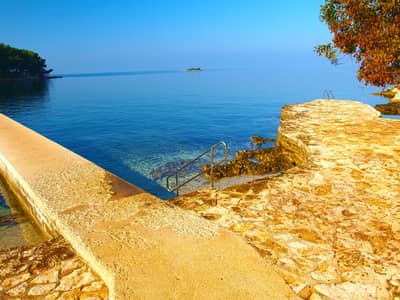
Gradsko kupalište
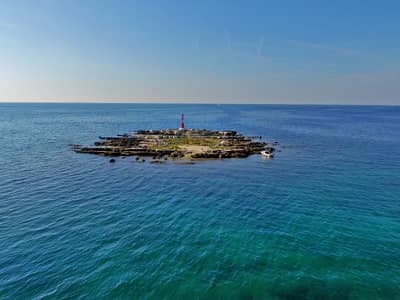
Laguna Materada
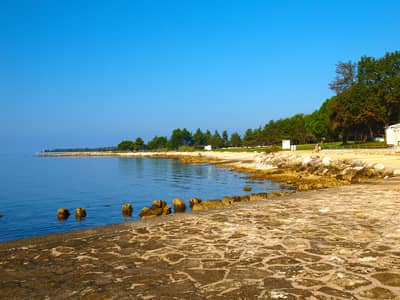
10
Euphrasian Basilica
Sustav Eufrazijeve bazilike čine znamenite građevine: Eufrazijeva bazilika, Župna crkva, Sakristija i cela trikora, Krstionica i zvonik, Maurov oratorij, kao i obližnji biskupski dvor, za koji je najnovijim istraživanjima utvrđeno da pripada istom bizantskom razdoblju kao i bazilika. U njemu je odnedavna smještena sakralna zbirka Porečko-pulske biskupije. Uz prezentaciju arheoloških ostataka, u prvom redu mozaika datiranih već u 3. st., u kompleksu možemo razgledati vrijedne sakralne spomenike i umjetničke predmete starokršćanskoga, ranobizantskog i srednjovjekovnog razdoblja. Bazilika, zapravo katedrala Uznesenja Marijina, počela se graditi 553. na temeljima ranije trobrodne bazilike. Do danas je doživjela niz promjena, pa na izvornom zdanju iz ranokršćanskog perioda stoji treća crkva u gotičkom stilu. Iako su samu zgradu oštetili potresi, ratovi i požari, autentični podni mozaici iz 5. st. ostali su sačuvani i reprezentativan su primjerak ranokršćanskog slikarstva. Prikaz Krista, te likovi mučenika i mučenica, kao i fascinantna kompozicija Bogorodice na prijestolju zadivljuju izradom filigranske finoće. Najstariji pak fragmenti mozika datiraju u 3. st. Blještavi mozaici, kojima su oslikani unutrašnjost i pročelje crkve, idu u red najljepših sačuvanih djela bizantske umjetnosti. Mozaicima su iznad apside predstavljeni apostoli s Isusom, u centralnom dijelu tadašnji biskup Eufrazije s maketom bazilike, anđeli čuvari, Djevica Marija s Isusom u krilu, domaći sveci mučenici, posebice sveti Mauro – prvi biskup, potom mučenik i zaštitnik grada Poreča i cijele istarske biskupije. Uz sam rub slavoluka poredani su polukružno "medaljoni" s likovima mučenica. Dva glavna mozaična prikazanja predstavljaju Navještenje i Vizitaciju koja predstavlja umjetničku rijetkost jer je Blažena Djevica Marija prikazana trudna u susretu s Elizabetom. Trobrodnu katedralu nose dva reda vitkih mramornih stupova s raskošnim kapitelima.
01

Več o Poreču
izvedeti več
Poreč Zgodovina
Poreč je zanimivo slikovito mesto, ki se nahaja na zahodni obali Istre. Lepa in bogata narava v okolici mesta zagotavlja odlične priložnosti za pridelovanje vina, obširne nasade oliv in predvsem za razvoj turistične industrije. Vendar pa se je zgodovina mesta začela že pred 2000 leti. Med številnimi narodi, ki so se naselili na tem predelu, so bila tudi Ilirska plemena Istre. Istrska plemena so premagali Rimljani. Ko so ti zavzeli Histris se je začela nova doba kulture in politike. Poreč je bil prvič omenjen 50 let pr.n.št., kot utrdba imenovana Opidum. Kasneje so na poreškem polotoku zgradili vojaško utrdbo in jo poimenovali Castrum.
Pomemben zgodovinski prelom se je zgodil po določenem času, ko je bila ta naselbina razglašena za osrednje administrativno, kulturno in ekonomsko mesto rimske kolonije. Ostanki Neptunovega in Velikega templja so bili najdeni na konveksnem delu polotoka. Našli so jih na Maraforju, pravokotnem trgu, na katerem so se do danes ohranili rimski tlakovci, skriti pod današnjimi tlemi. Arhitekturni presežek, ki je deležen največje pozornosti, je Stolnica Marijinega vnebovzetja, ki datira v 6. stoletje. To je najlepši primerek bizantinske arhitekture in umetnostni spomenik na jadranski vzhodni obali.